The Story
The Origin, Loss, & Revival
of The First Air Force One
Era I — Pre-Presidential Era (1948–1952)
The aircraft is built for long-range military and VIP transport, long before anyone knows the role it will play in American history.
1948 — Construction at
Lockheed Burbank
The C-121A Constellation is completed at Lockheed's Burbank factory as part of a new fleet of long-range transport aircraft for the U.S. Air Force. Designed for reliability and global mobility, the airframe reflects the aviation technology of the post-war era. This marks the beginning of the aircraft's service life that will eventually lead to the White House.
1948 — Eisenhower Becomes President of Columbia University
After leading Allied forces to victory in World War II and serving as Army Chief of Staff, Dwight D. Eisenhower becomes president of Columbia University in New York. His time at Columbia marks an important chapter between his military career and his eventual return to public service. While there, he remained closely engaged with national and international affairs, and his experiences at Columbia helped shape his thinking as he prepared for his next chapter in public life.


1950 — Early USAF VIP Service
Before its presidential duties, the aircraft serves as a transport for senior military leaders. These early missions help establish its dependability and performance on long, multi-leg flights. The experience gained during this period lays the groundwork for its later selection as a presidential aircraft.
1950 — Eisenhower Takes Command in Europe
Eisenhower is appointed Supreme Allied Commander, Europe, becoming the first commander of NATO's newly developing integrated military structure. He works to organize Allied forces under a unified command, build the new headquarters that would become SHAPE, and secure the troops and resources needed to defend Western Europe. His experience working with Allied nations would shape his approach to international cooperation and the Cold War during his presidency.


1951 — The First Columbine
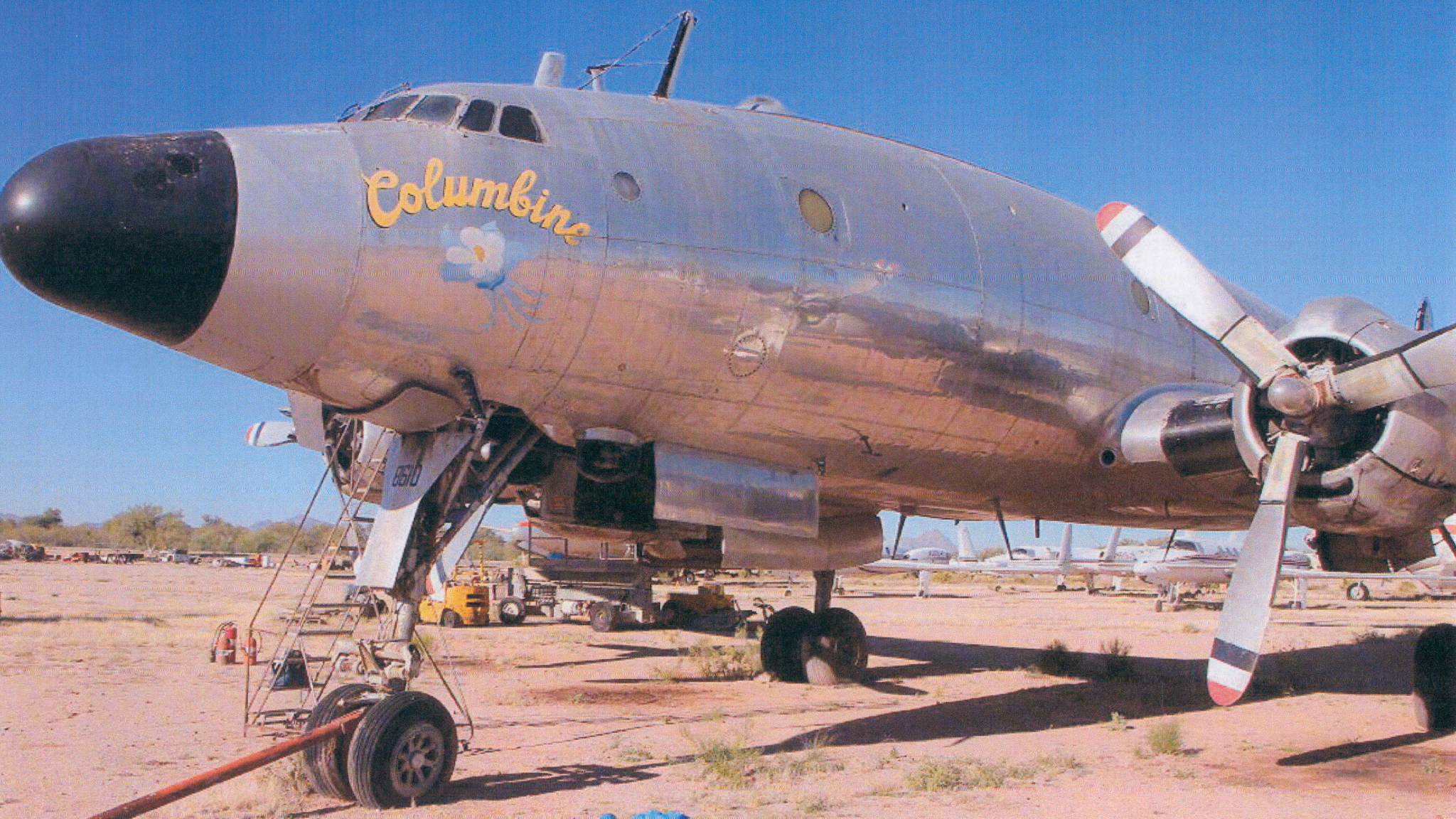
While serving in Europe, Eisenhower travels aboard a Lockheed Constellation named Columbine. Named for Colorado's state flower, the aircraft establishes the connection to the Columbine name that would continue with Columbine II.

1952 — Eisenhower's Trip to Korea
As President-elect, Dwight D. Eisenhower travels aboard this aircraft to visit American forces stationed in Korea. The flight fulfills a major campaign promise and signals his commitment to understanding the conflict firsthand. This mission becomes a defining moment in the aircraft's early history and positions it for future presidential use.

1953 — Eisenhower is inaugurated
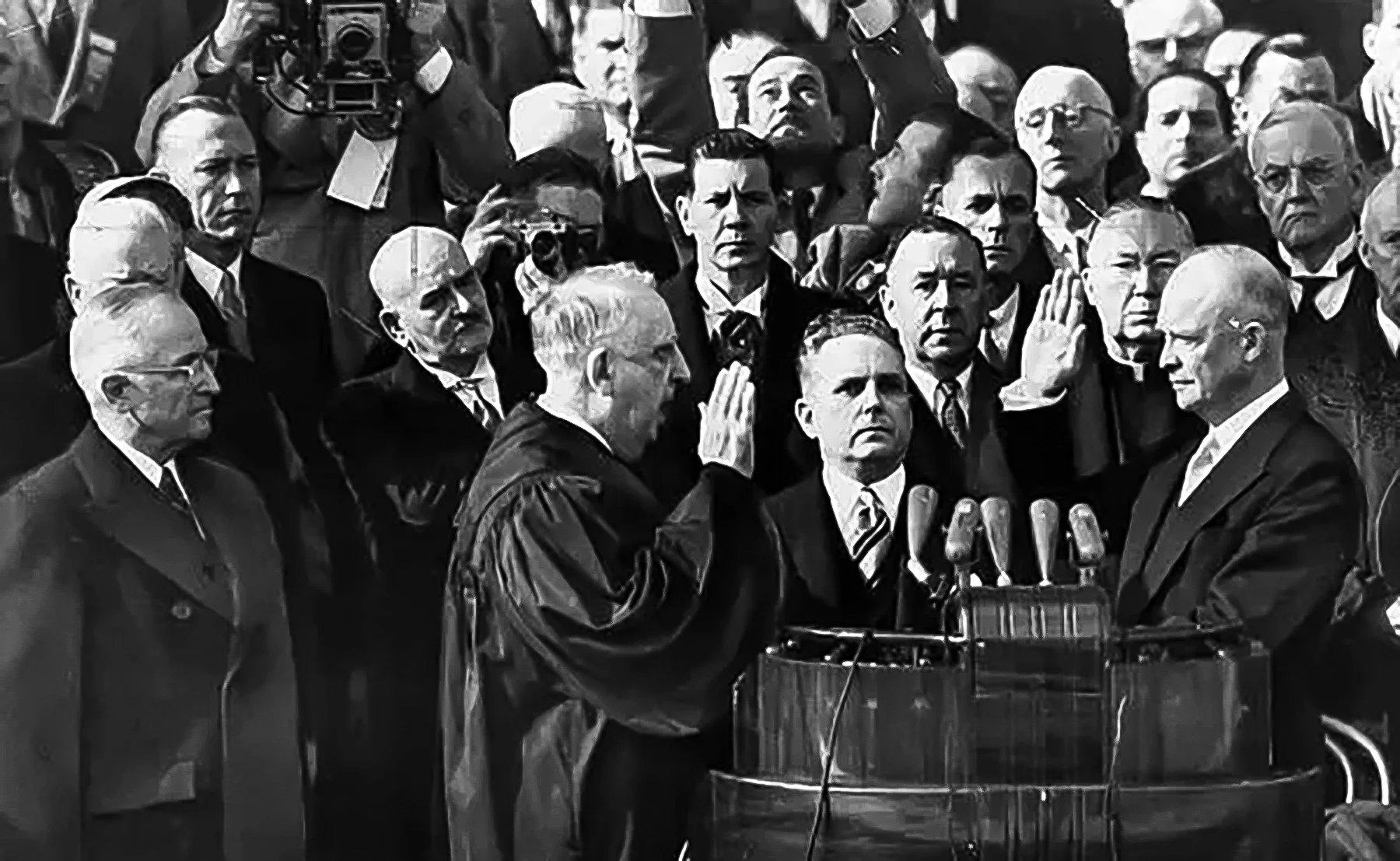
On January 20th, 1953, Dwight D. Eisenhower is inaugurated as the 34th president of the United States.
Era II — Presidential Use (1953-1954)
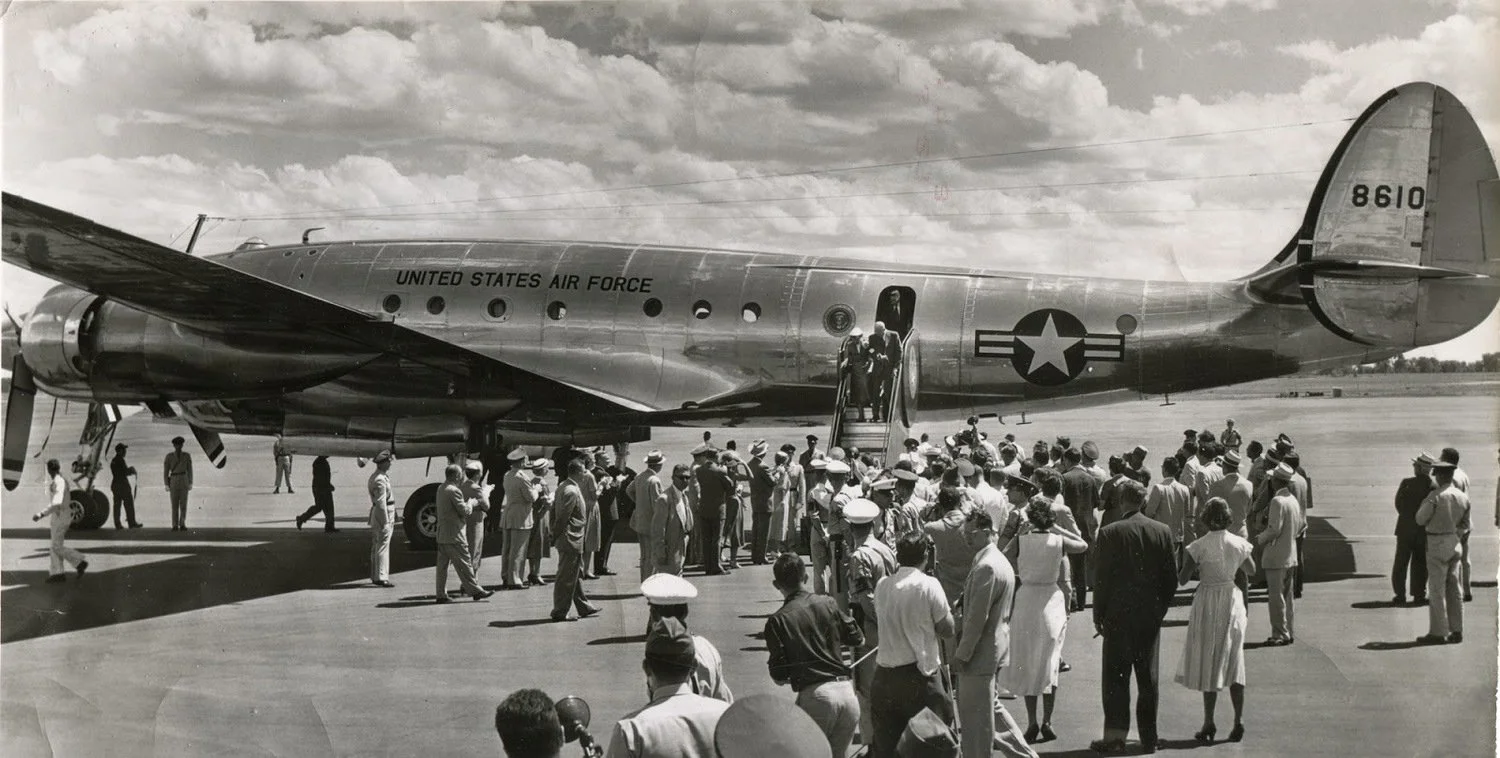
Columbine II enters the national spotlight as the primary aircraft of the President of the United States.
1953 — Conversion into VC-121A "Columbine II"
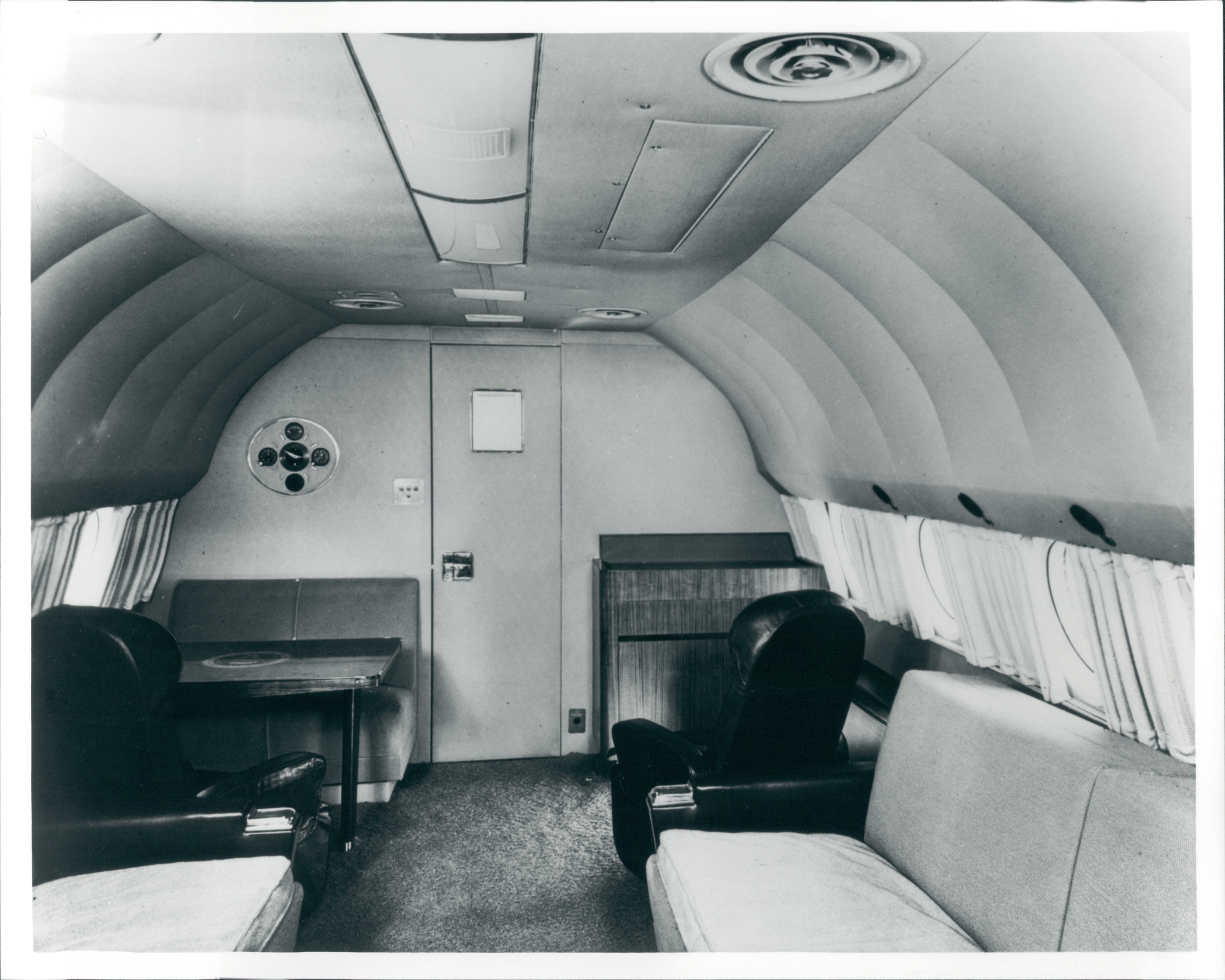
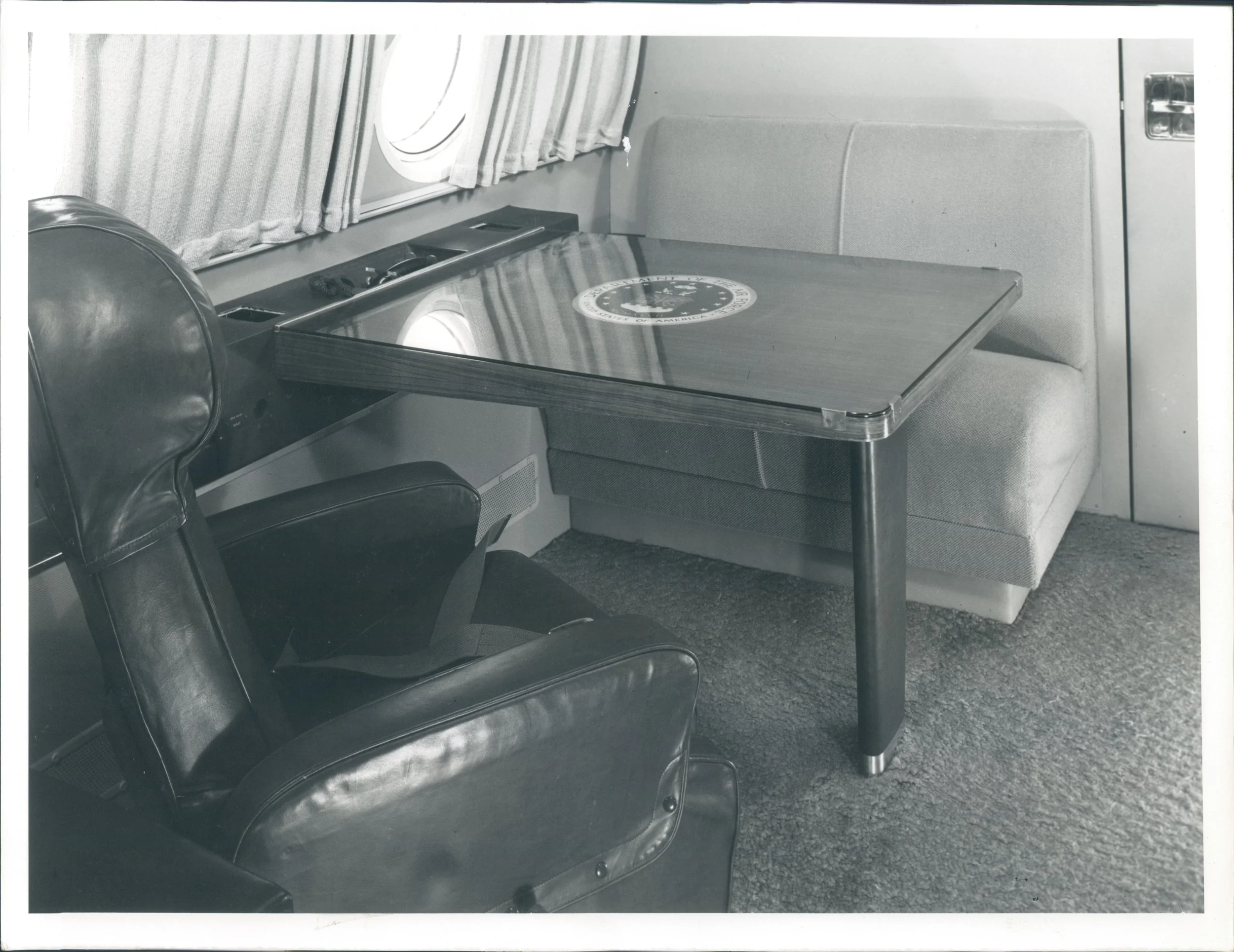
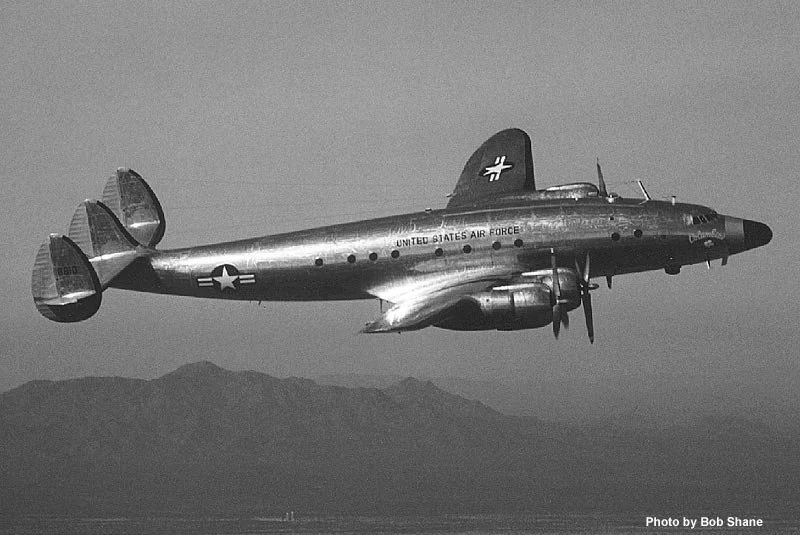
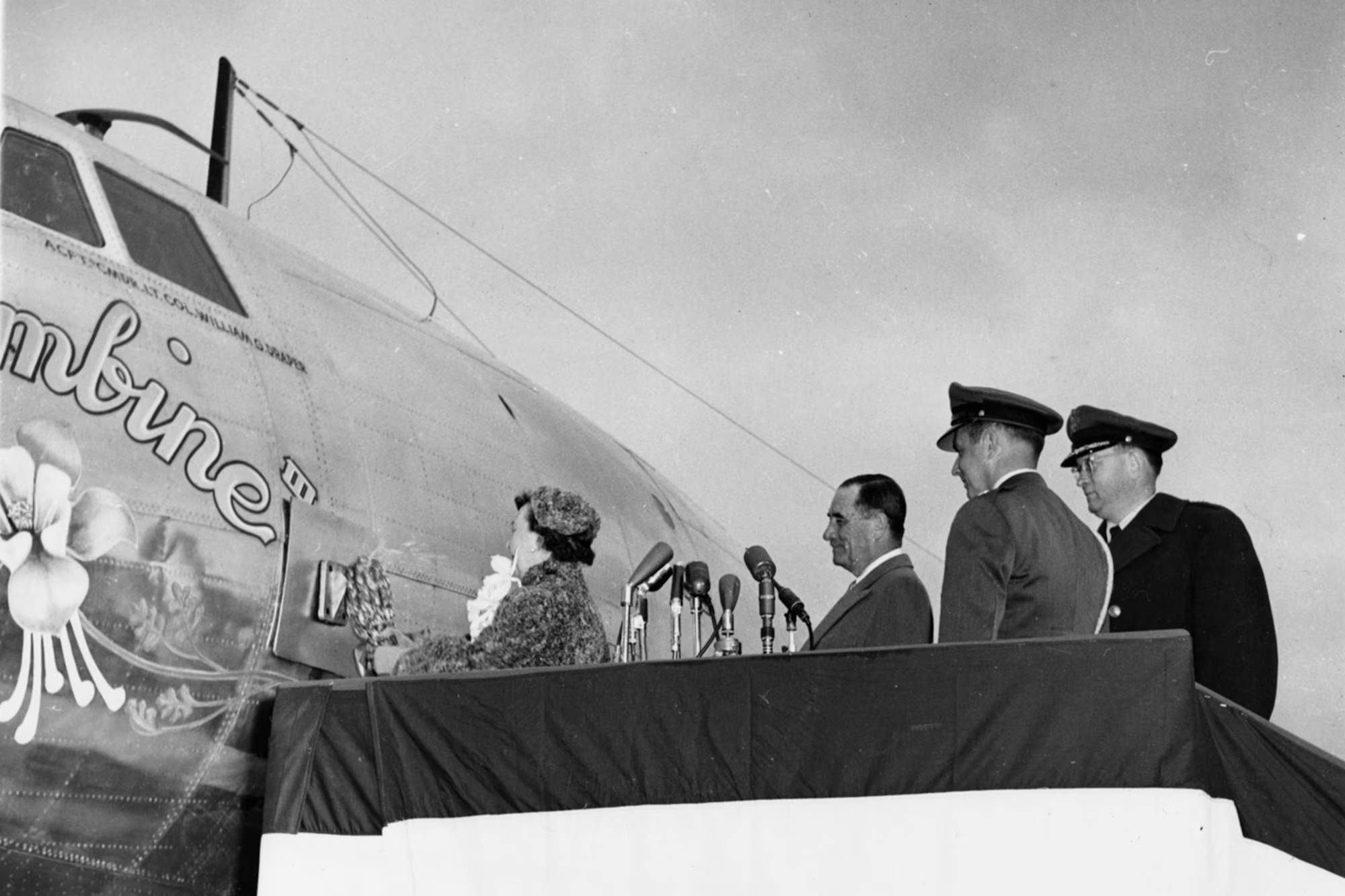
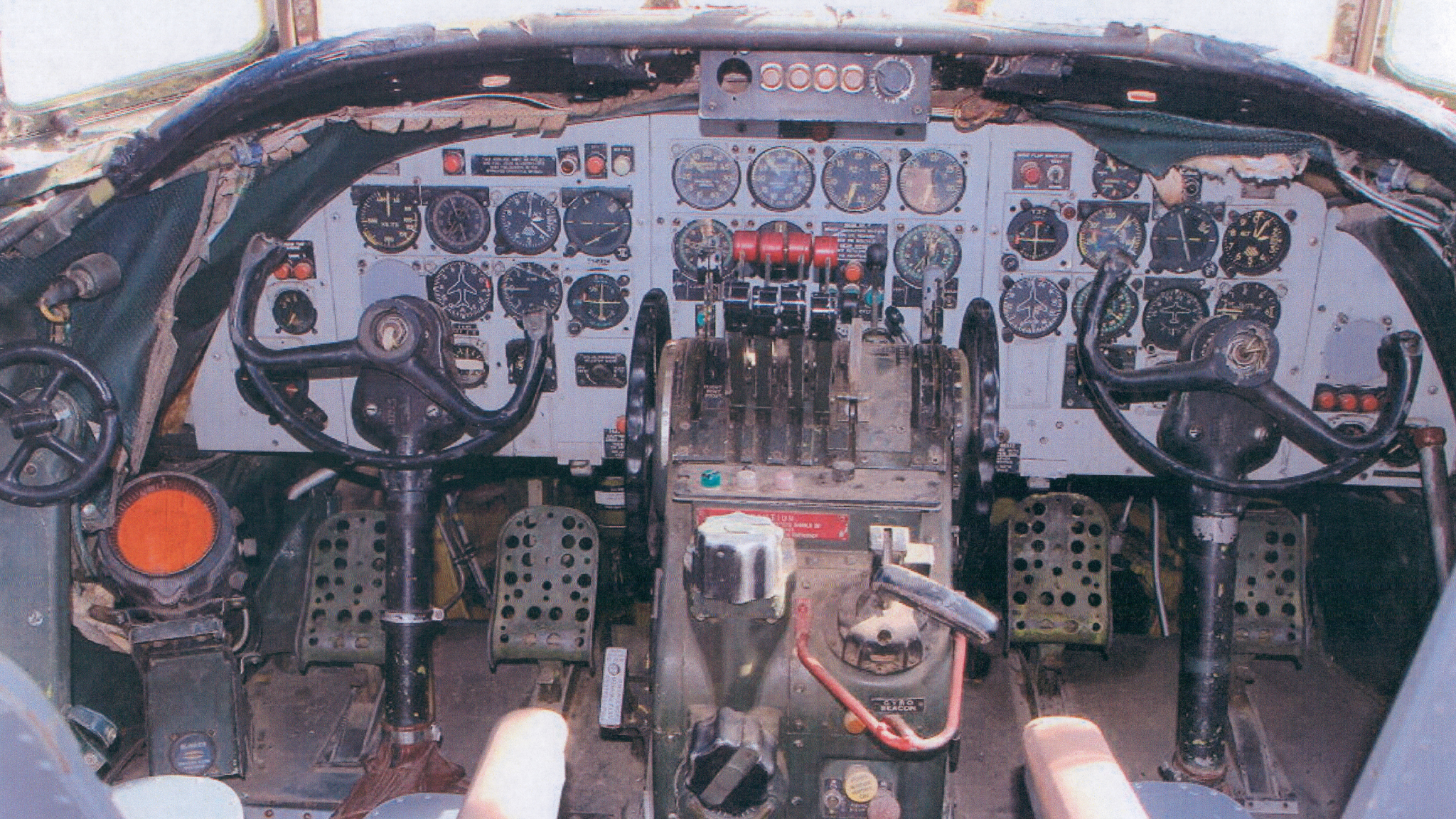
The aircraft is upgraded to presidential standards and redesignated as a VC-121A. Interior improvements, communications equipment, and security features are added to support White House operations in flight. The name Columbine II is adopted, linking the aircraft to First Lady Mamie Eisenhower's home state of Colorado.
1953 — First International Diplomatic Missions
During its first year as a presidential aircraft, Columbine II carries President Eisenhower on international missions as he works to strengthen America's alliances during the Cold War. The aircraft becomes an important tool of presidential diplomacy, allowing Eisenhower to meet with foreign leaders and represent the United States abroad.

1953 — Columbine II Flies to Bermuda
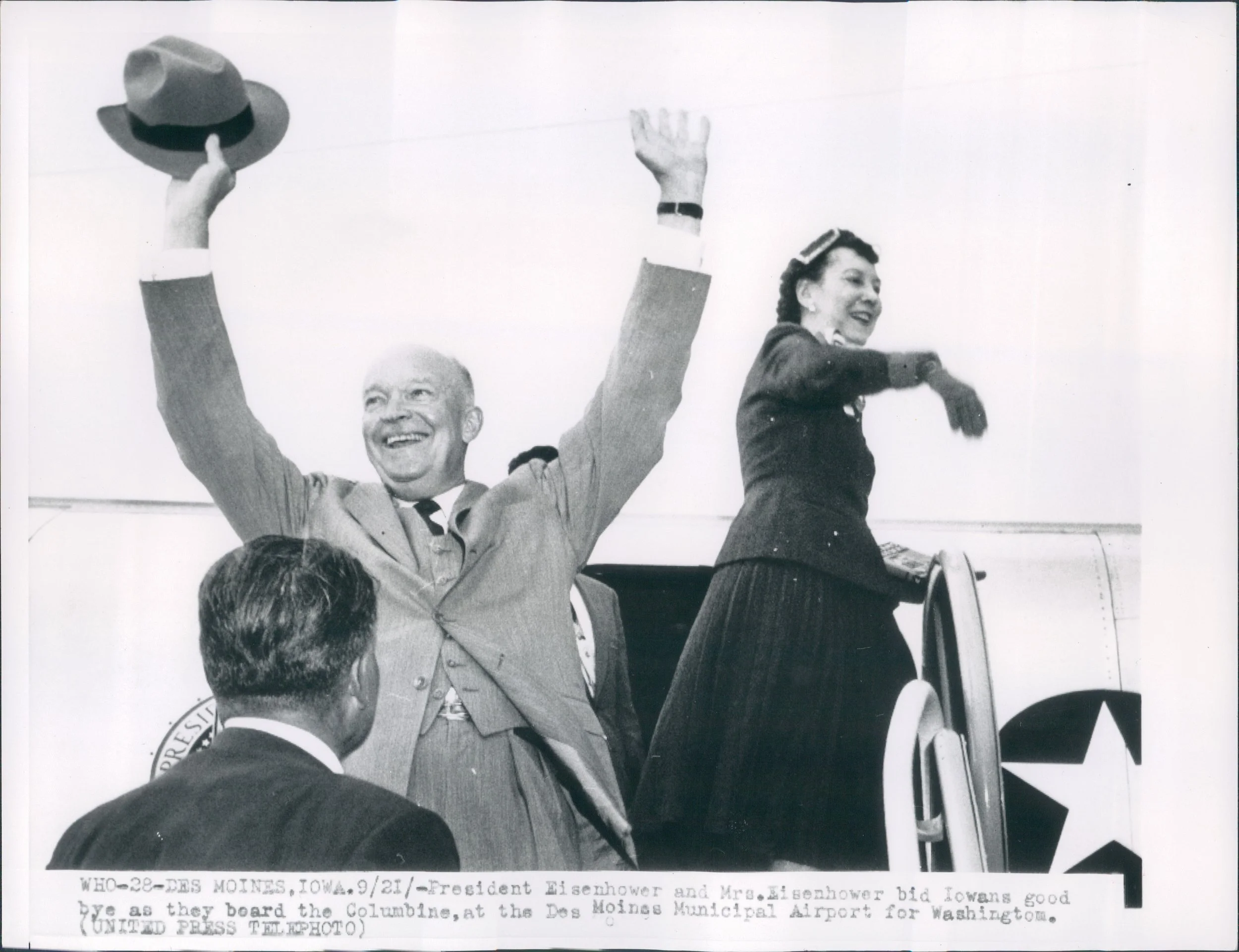
President Eisenhower travels aboard Columbine II to Bermuda for a historic meeting with British Prime Minister Winston Churchill and French Prime Minister Joseph Laniel. From December 4–8, the three leaders discuss atomic energy, European security, Korea, NATO, and relations with the Soviet Union.

1953 — Writing the "Atoms for Peace" Speech in Flight
While traveling aboard Columbine II, President Eisenhower drafts portions of his landmark "Atoms for Peace" address, delivered before the United Nations in December 1953. This moment highlights how the aircraft served not just as transportation, but as a working extension of the Oval Office.


1954 — The Birth of "Air Force One"
Columbine II becomes the first aircraft in American history to use the call-sign Air Force One after a close call with a commercial flight in South Carolina.
1954 — Final Presidential Missions and Succession
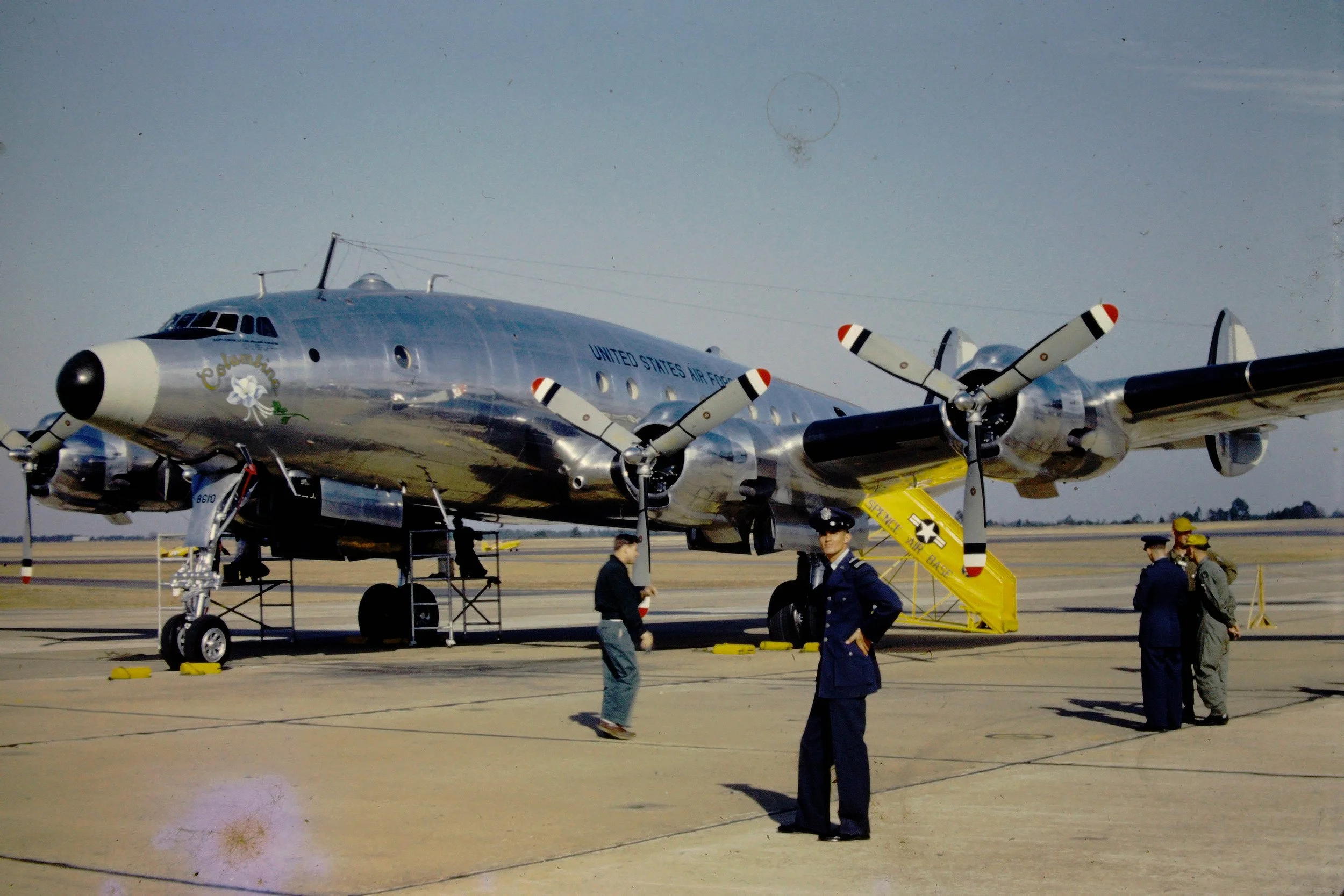
Columbine II continues to serve President Eisenhower until later in 1954, when it is superseded by its successor, Columbine III. Its historic service secures its permanent place in aviation history.
Era III — Post-Presidential Use (1955-1977)
After its White House service, the aircraft enters a surprising and unlikely chapter.
1955–1957 — Columbine II Flies for Pan Am
After being replaced as President Eisenhower's primary aircraft, Columbine II is transferred to Pan American World Airways for a special assignment. The aircraft spends two years with Pan Am before returning to U.S. Air Force service, where it continues flying VIP missions.

1960 — Retirement from VIP Service
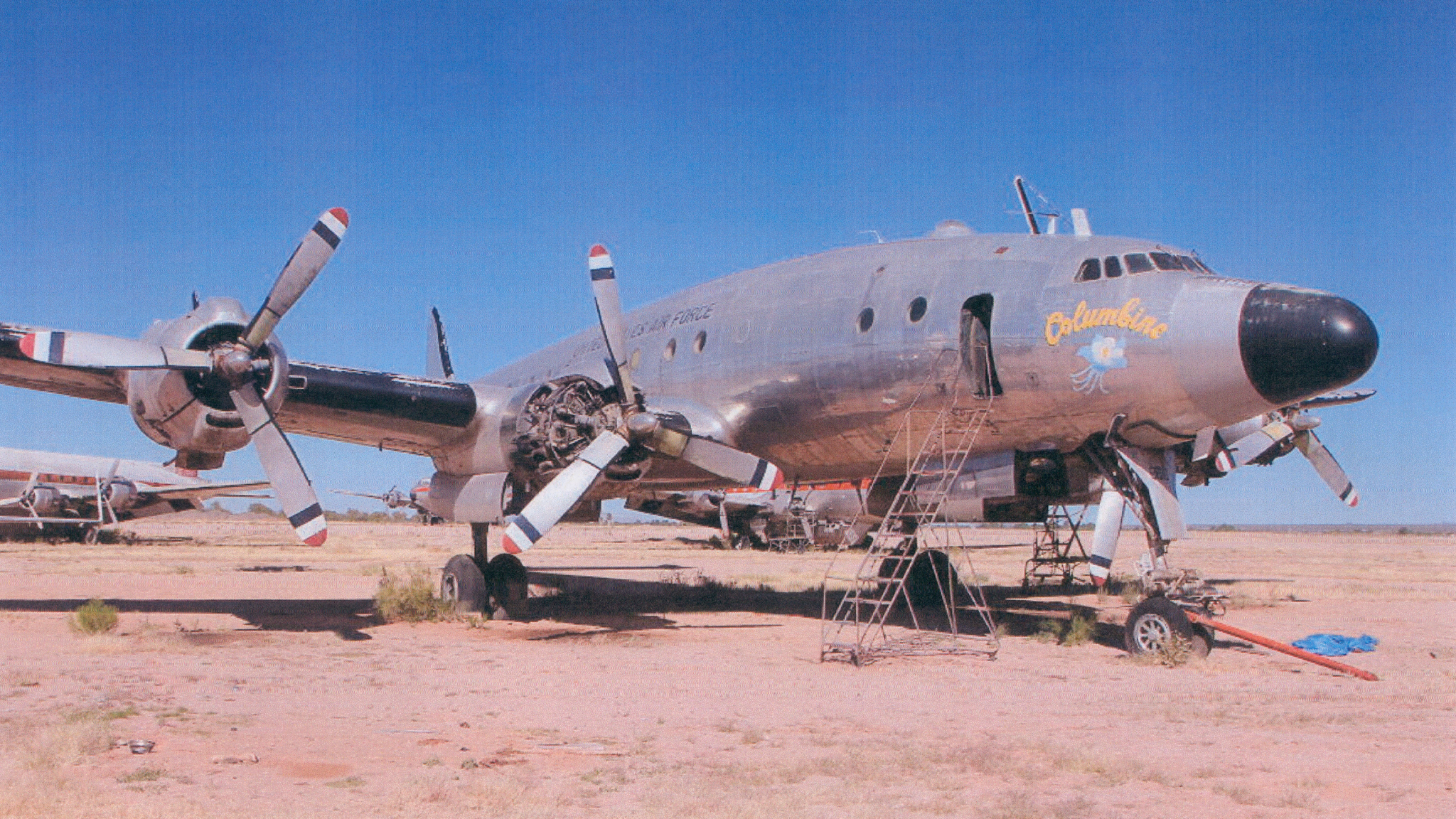
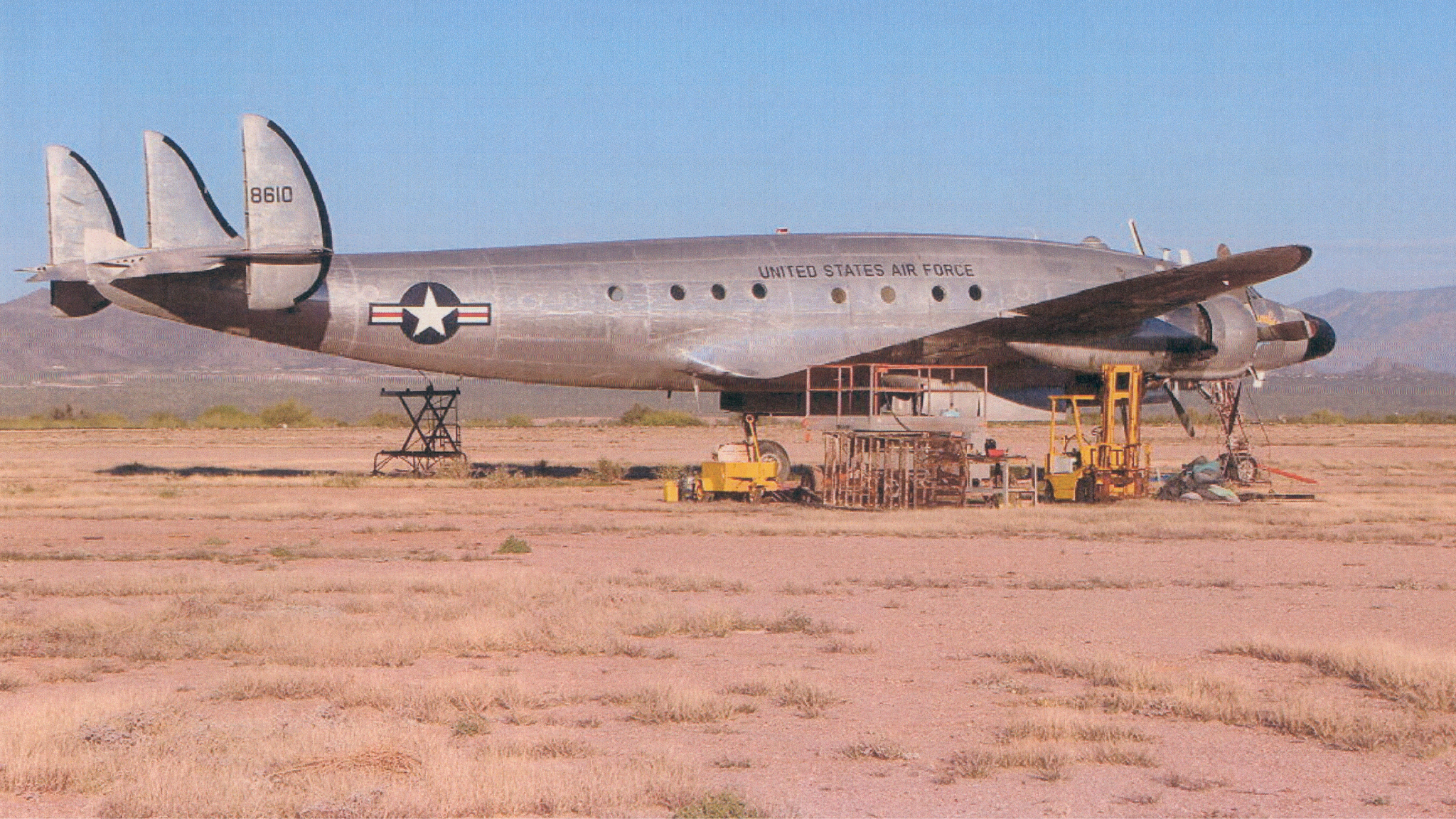
After years of military use, the aircraft is retired and flown to Davis–Monthan Air Force Base for storage where it becomes one of many surplus aircraft awaiting reassignment or disposal. The airframe enters a period of uncertainty regarding its future.
1970 — Sold at Surplus Auction
The aircraft is purchased by agricultural aviation operator Mel Christler as part of a lot of surplus Constellations. At the time, its connection to the Eisenhower administration is unknown. Columbine II is moved from military storage into civilian ownership without recognition of its historic role.
1970s — Crop-Dusting and Parts Support
Christler uses the aircraft to support crop-dusting operations and to provide parts for other Constellation airframes in his fleet. The transformation from presidential transport to agricultural workhorse marks one of the most dramatic changes in the aircraft's life. During this period, its presidential identity remains largely forgotten.
Late 1970s — Preservation by the Christler Family
As upkeep becomes difficult, the aircraft faces pressure to be scrapped. The Christler family chooses to preserve it instead, believing it may have historical significance. Their decision ultimately prevents the loss of an irreplaceable piece of presidential history.
Era IV — Arizona Desert Era (1978–2014)
The aircraft is rediscovered, recognized, and nearly lost again during decades in the desert.
Late 1970s / Early 1980s — Smithsonian Confirms Its Identity
During the late 1970s and into the early 1980s, research by the Smithsonian Institution confirms that the aircraft owned by the Christler family is, in fact, the original Columbine II. This verification establishes it as the first aircraft to use the "Air Force One" call-sign. Although the discovery brings renewed historical interest, the resources needed for a full restoration are not yet available.
1989 — Limited Public Appearances Before Storage
The aircraft makes a small number of public appearances, including airshows in 1989, introducing a new generation to its unique place in presidential aviation. Despite these efforts, the aircraft soon returns to storage. Continued exposure to the elements and limited maintenance begin to take a toll on its condition.
1990 — Columbine II Returns to the Skies
After years on the ground, Columbine II is restored to flying condition and returns to the skies for events commemorating the 100th anniversary of President Eisenhower's birth. The aircraft flies to Abilene, Kansas, Eisenhower's hometown, where it takes part in the centennial celebrations, marking a remarkable return nearly four decades after it served as his presidential aircraft.

1990s — Restoration Attempts Stall
Throughout the 1990s, several groups express interest in restoring Columbine II, but the scale and cost of the project prevent meaningful progress. Changing ownership discussions and aborted plans leave the aircraft without a clear path forward. As the decade ends, it remains inactive and increasingly fragile.


2003–2014 — Long-Term Storage in the Arizona Desert
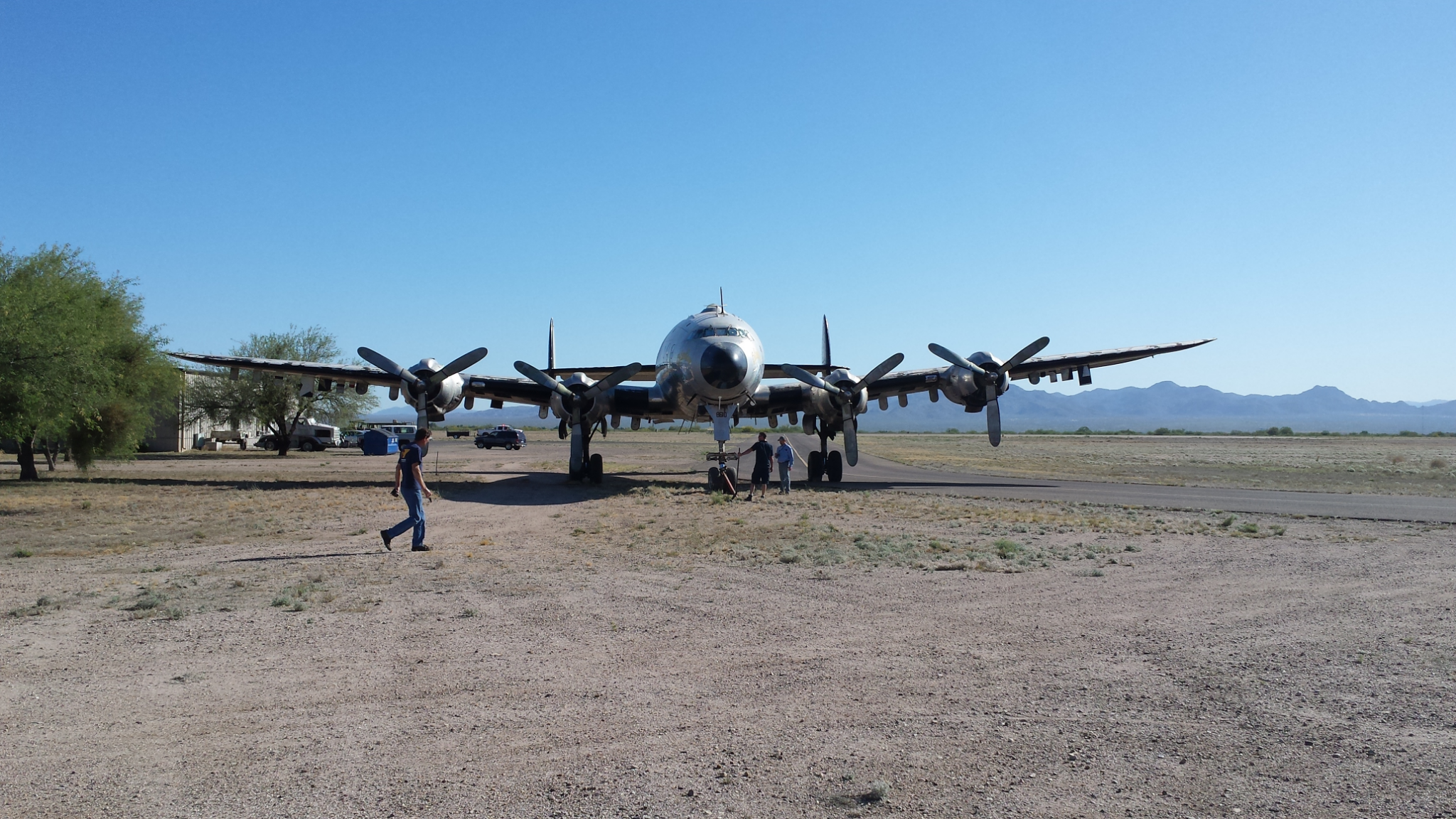
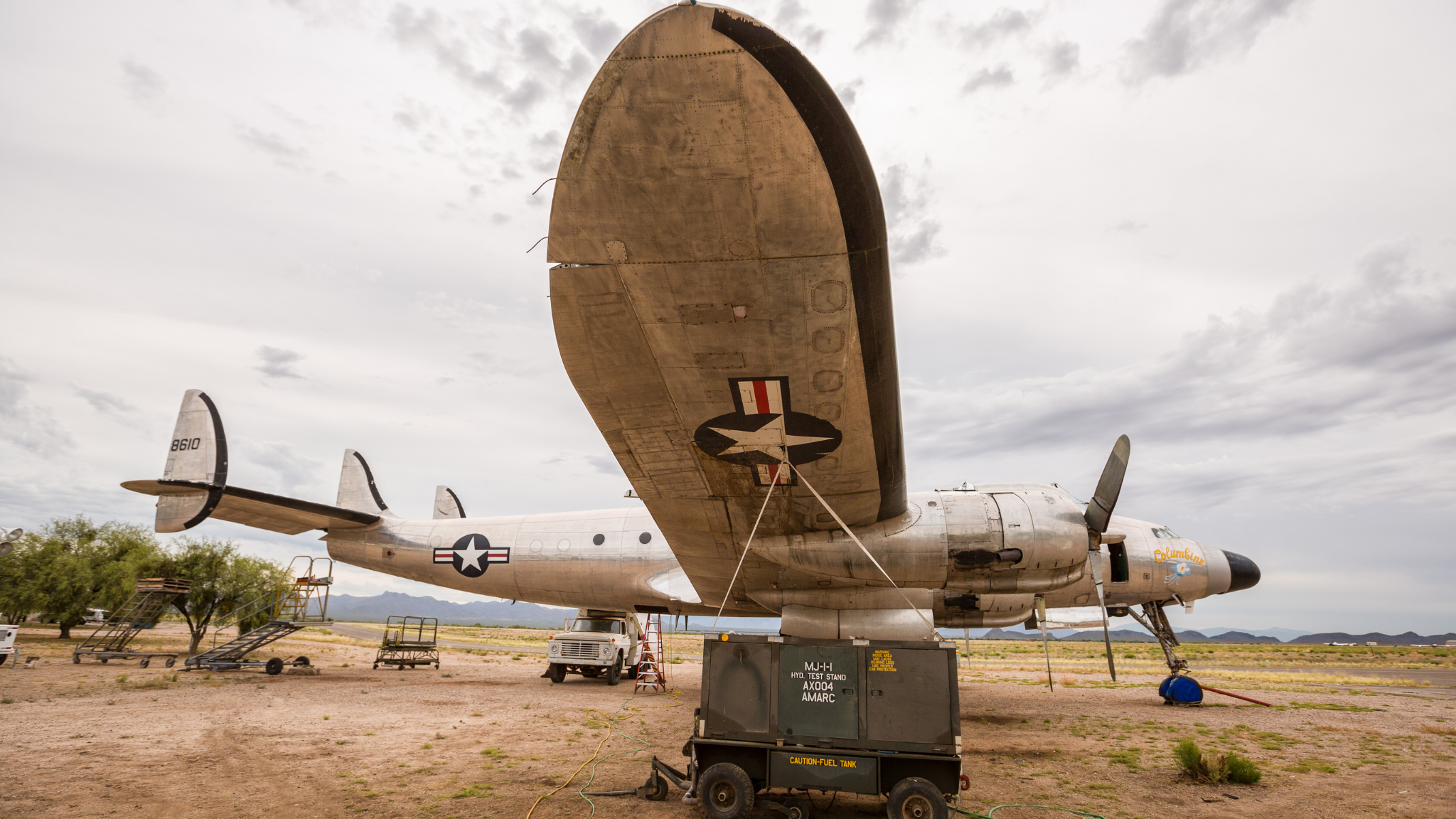
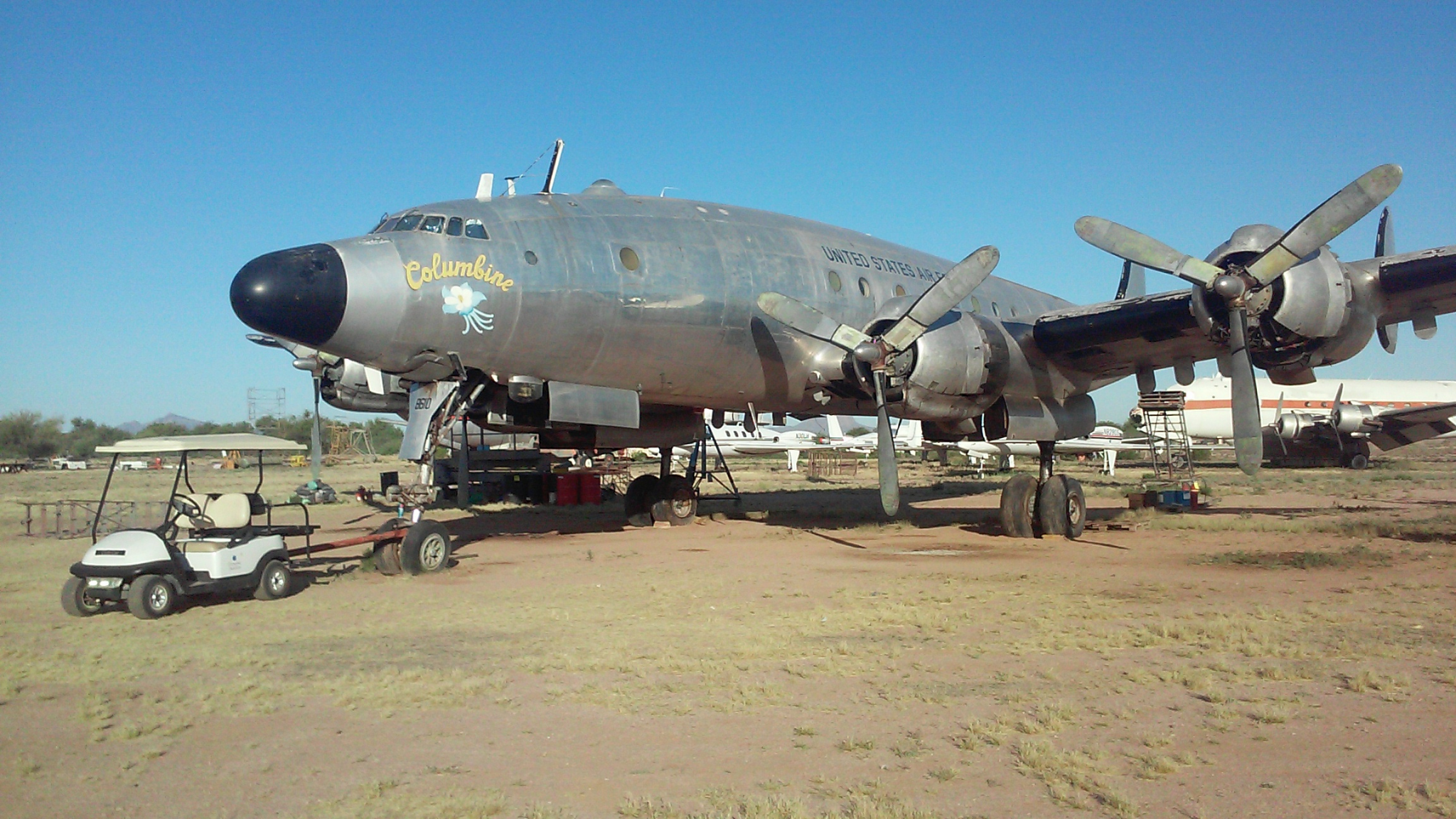
By 2003, the aircraft is moved to Marana Regional Airport in Arizona, where it spends more than a decade in desert storage. Weathering, heat, and time accelerate its deterioration as it sits far from public view. Despite its confirmed historical significance, the aircraft gradually fades from public memory, and its future becomes increasingly uncertain.


Era V — Restoration Era (2014–Present)
The aircraft is rescued, preserved, and prepared for a new life as a flying educational platform.
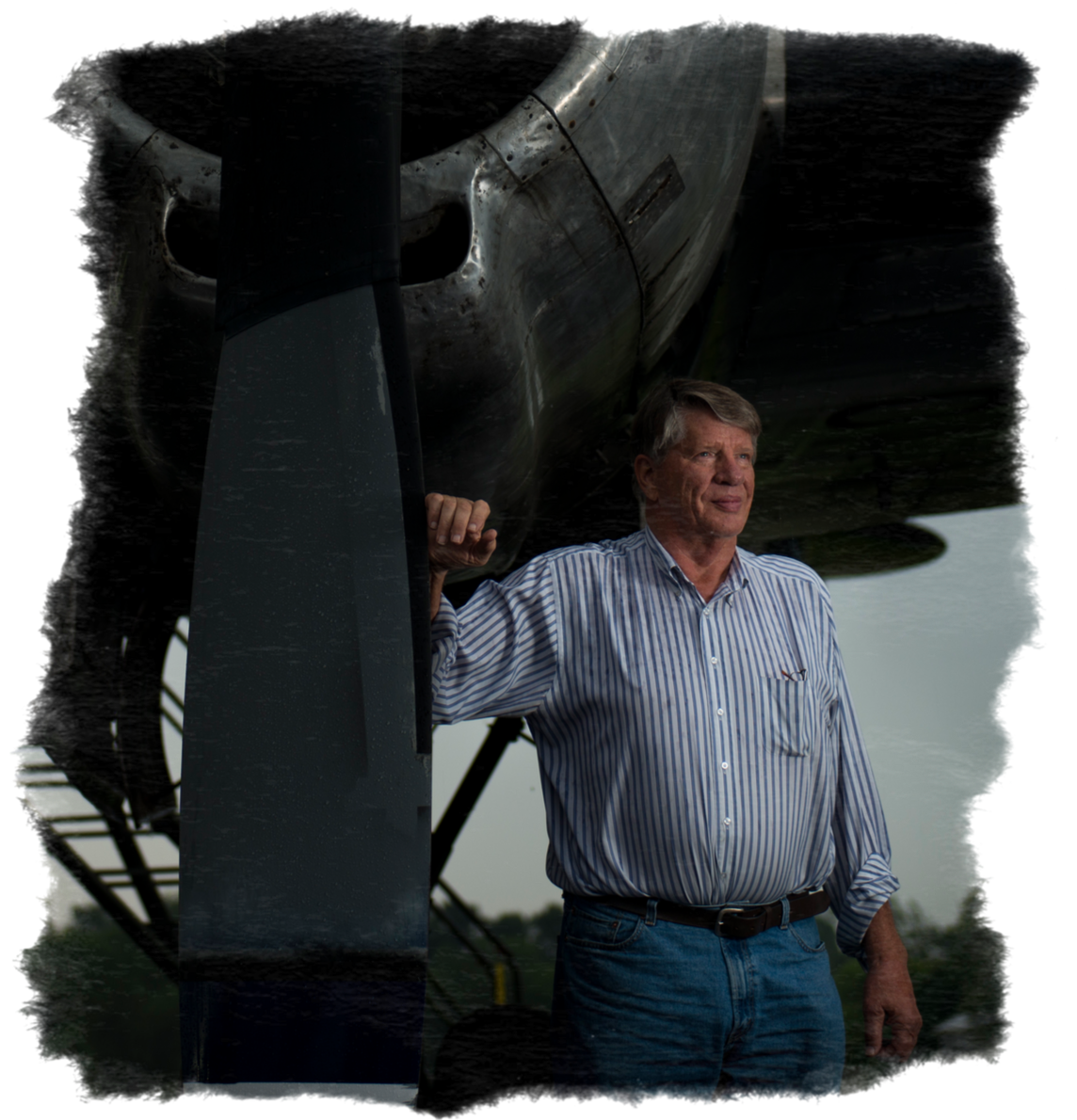
2014 — Karl Stoltzfus Sr. Discovers the Aircraft's Fate
Aviation pioneer Karl Stoltzfus Sr., founder of Dynamic Aviation, learns of the aircraft's condition and historical significance. Recognizing the urgency of its preservation, he commits to saving it from further deterioration. His decision marks the beginning of the aircraft's modern restoration.
2015 — Preparation for Ferry Flight
A team of engineers and specialists begins work to bring the aircraft back to minimal flight status in the Arizona desert. This effort requires extensive repairs and testing to ensure it can safely make the journey to Virginia. Months of preparation culminate in readiness for relocation.
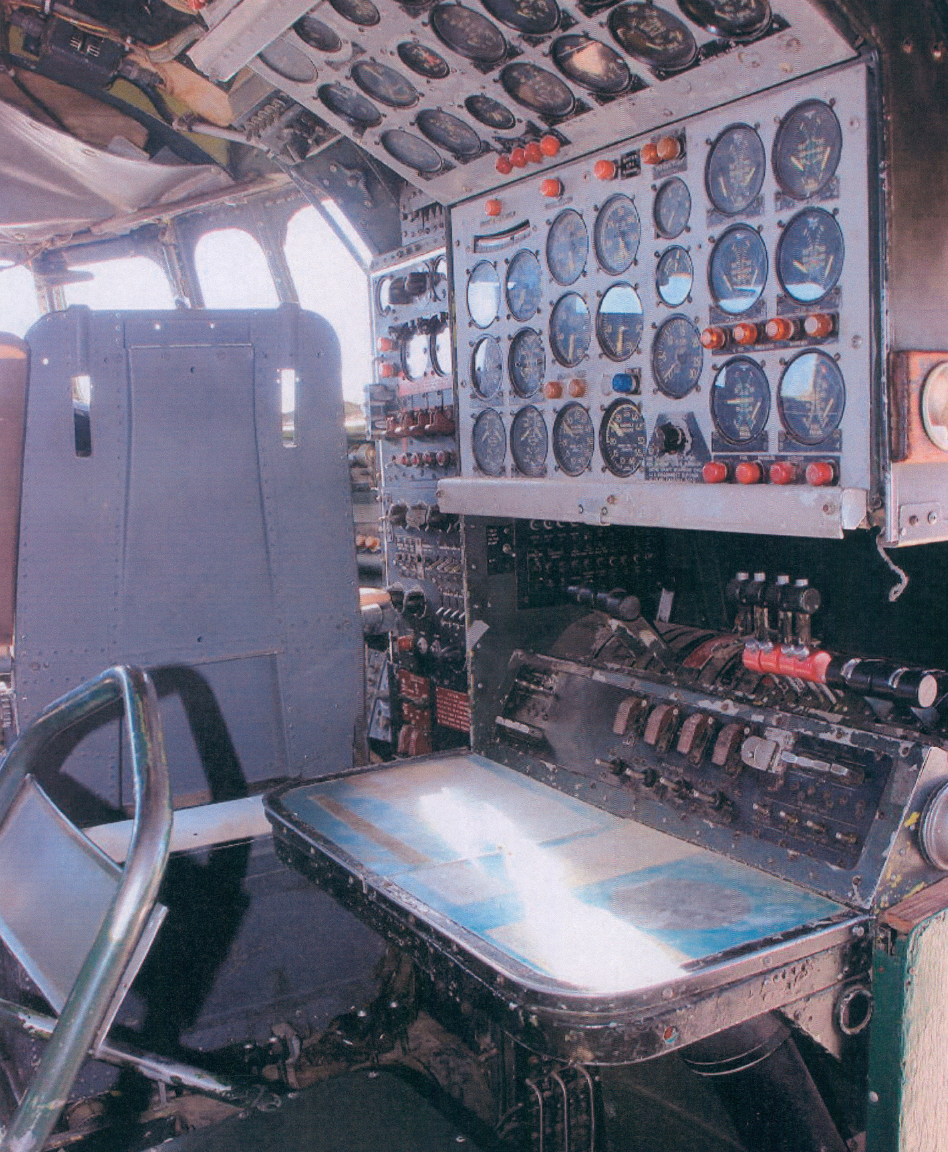
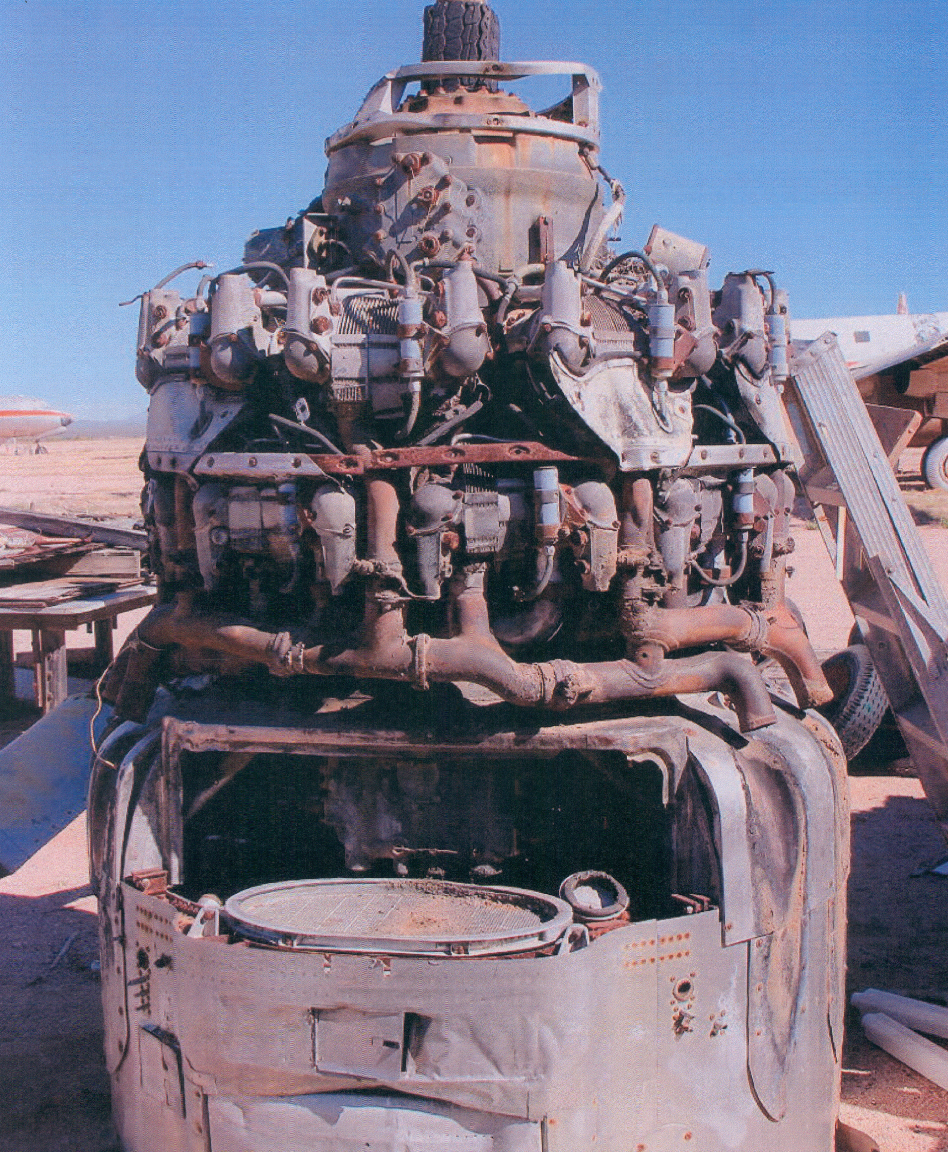
2016 — The Ferry Flight to Virginia
Columbine II departs Arizona and completes a multi-leg ferry flight to Bridgewater, Virginia. The flight captures national attention as the former presidential aircraft returns to the skies for the first time in decades. Its arrival marks a major step forward in its preservation.

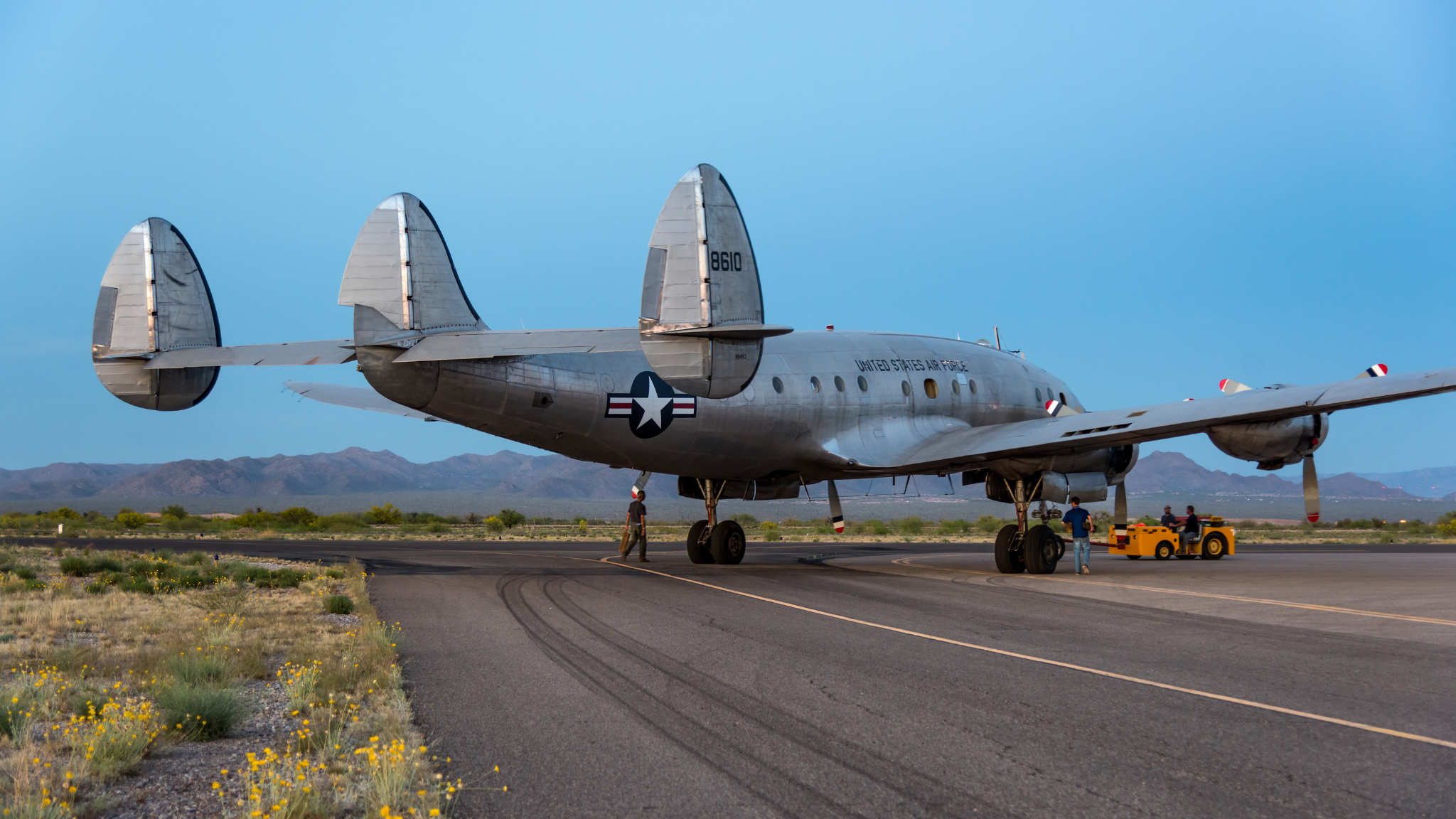
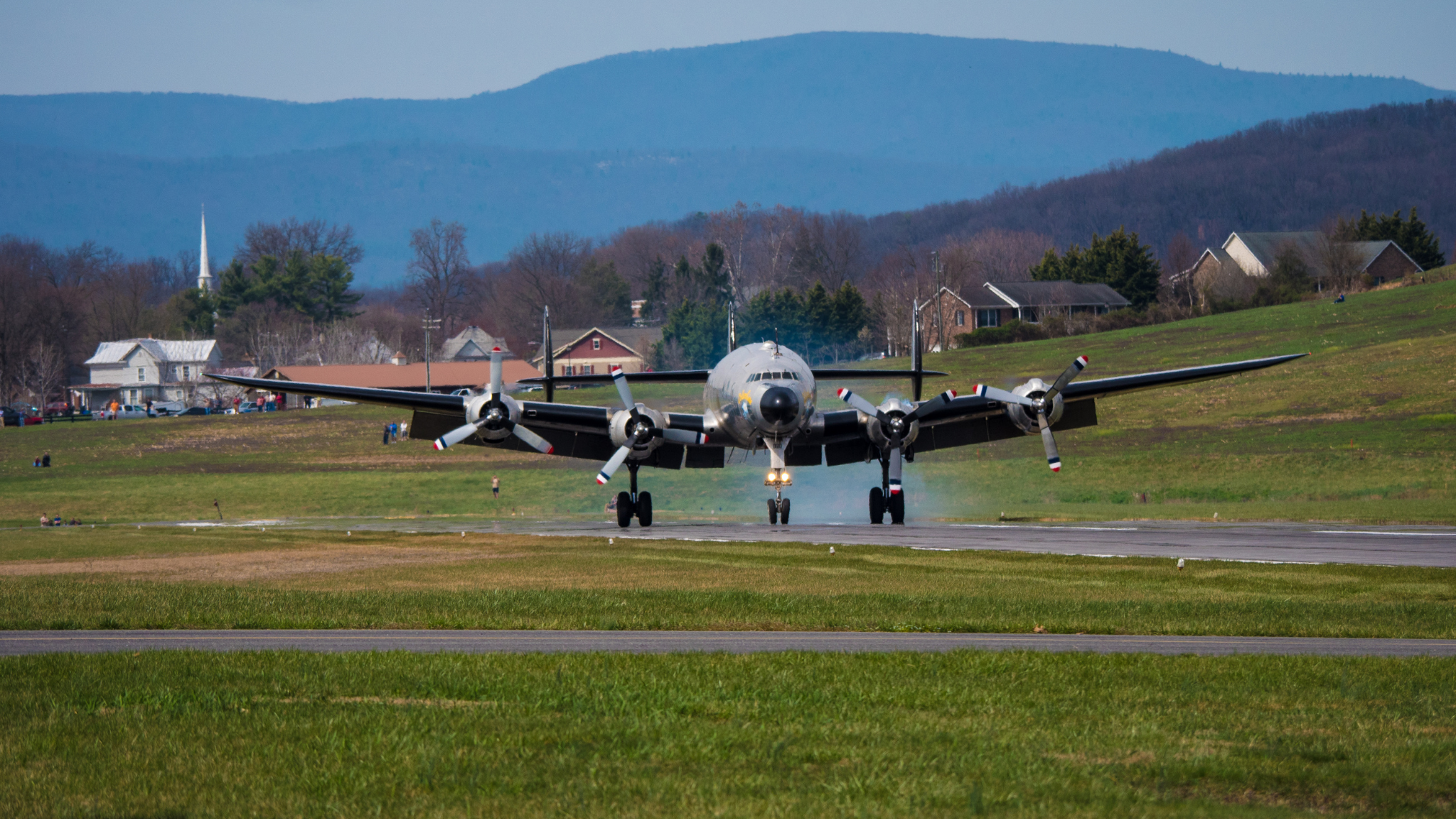
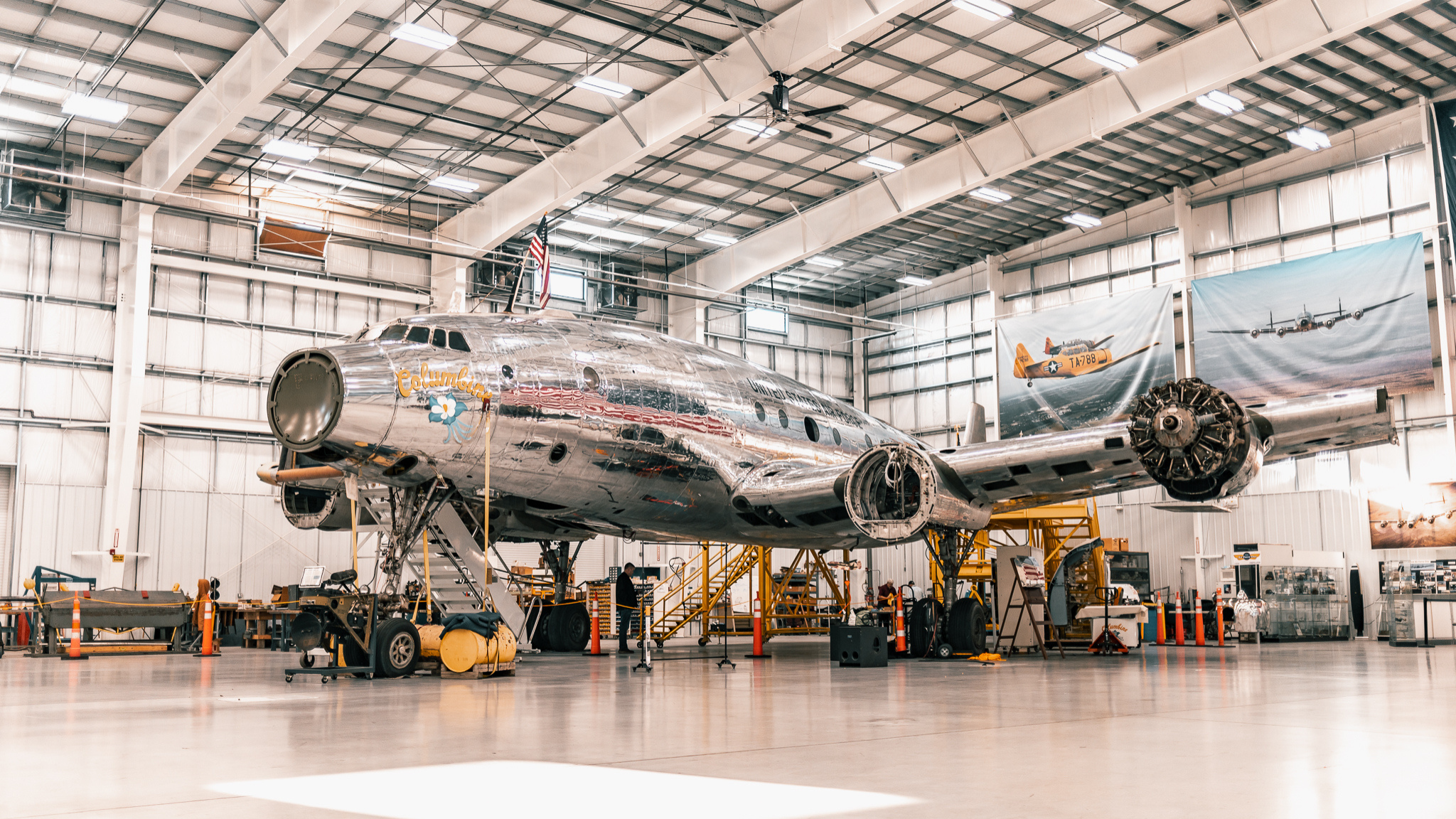
2016–Present — Full Restoration Effort
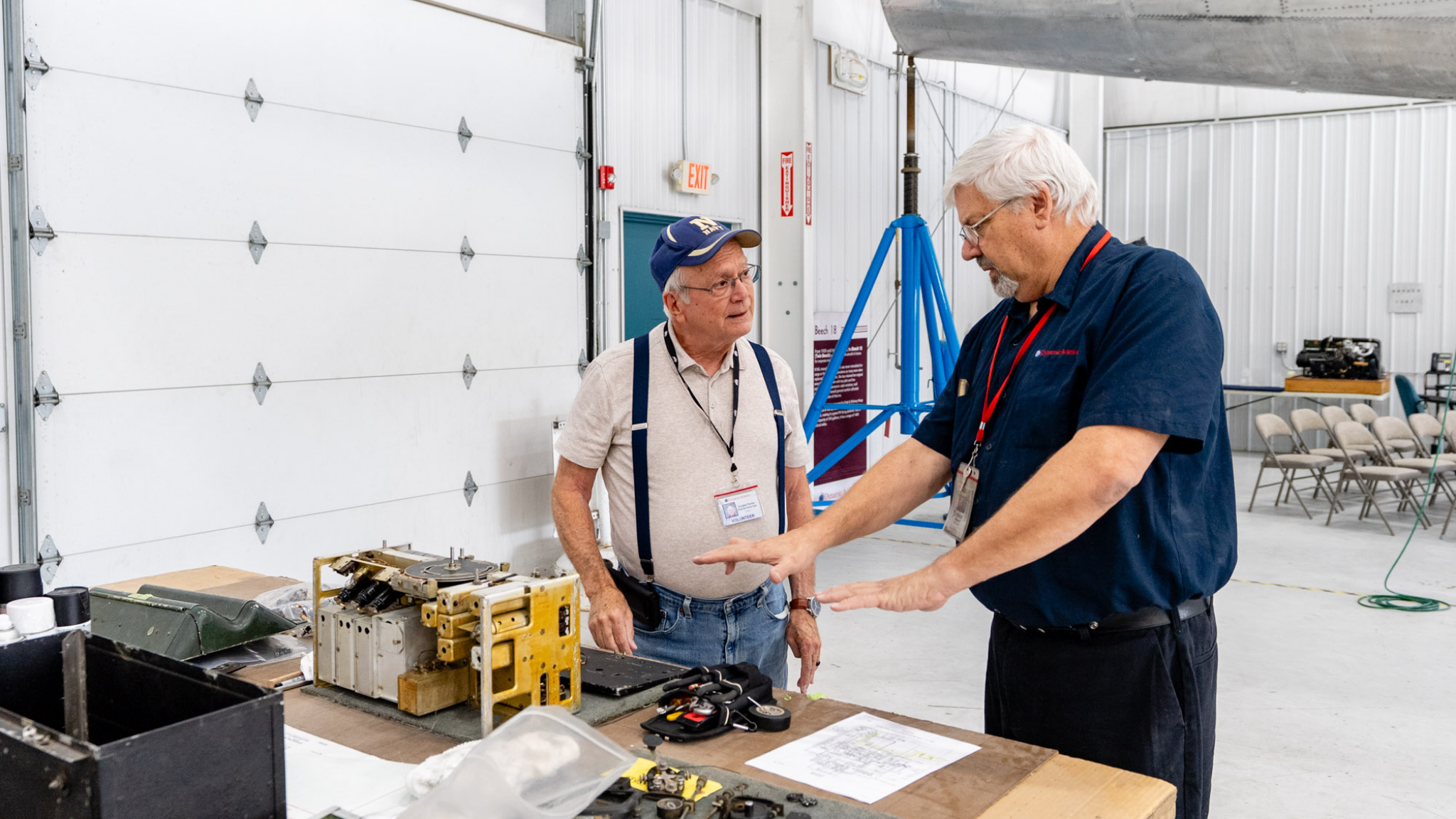
Restoration work begins immediately upon arrival in Virginia, focusing on structural repairs, mechanical systems, wiring, and historically accurate interiors. The project is undertaken by specialists, volunteers, and aviation experts committed to returning the aircraft to airworthy condition.
Future — Plan to Inspire the Future
Once restored, Columbine II will serve as both a traveling educational platform and a permanent museum centerpiece. Through public tours, educational programming, and national outreach flights, the aircraft will highlight the early years of presidential aviation. Check out the story of its journey in the video below.
Honoring the Memory of
Karl Stoltzfus, Sr.
The vision to restore Columbine II would not be possible without the passion and determination of Karl Stoltzfus, Sr., founder of Dynamic Aviation. Karl saw in this aircraft not just a piece of history, but a living symbol of American leadership, innovation, and unity.
It was Karl’s unwavering belief that the First Air Force One deserved to fly again that set this restoration in motion. He championed the effort, rallied support, and laid the foundation for a project that now inspires people across the nation.
Though Karl is no longer with us, his spirit continues to guide this mission. By honoring Karl Stoltzfus, we carry forward his dream: that Columbine II will soar once more, reminding future generations of the optimism, reconciliation, and pursuit of peace that can shape our world.