
How Eisenhower Drafted the "Atoms for Peace" Speech Aboard Columbine II
The Flight That Changed Nuclear History
It was 1953. The world had emerged from the most devastating conflict in human history — only to find itself locked in a new and unfamiliar standoff. The atomic age had arrived, and with it, a question that no nation had yet dared to answer: could the most destructive force ever unleashed be turned toward peace?
The answer began to take shape not in Washington, not in a conference room, but aboard an aircraft at altitude — aboard Columbine II, the Lockheed Constellation that served as President Dwight D. Eisenhower’s presidential plane as he drafted the Atoms for Peace speech — and the first aircraft used by a sitting U.S. president when the “Air Force One” call sign was first applied.
Columbine II, President Eisenhower’s Lockheed Constellation presidential aircraft — a key setting in the story of the Atoms for Peace speech.
A Workspace at 20,000 Feet
Columbine II was not simply a means of transportation. It was a pressurized, long-range command platform — a controlled environment where the President could think, draft, and decide between destinations, beyond the immediacy of the capital.
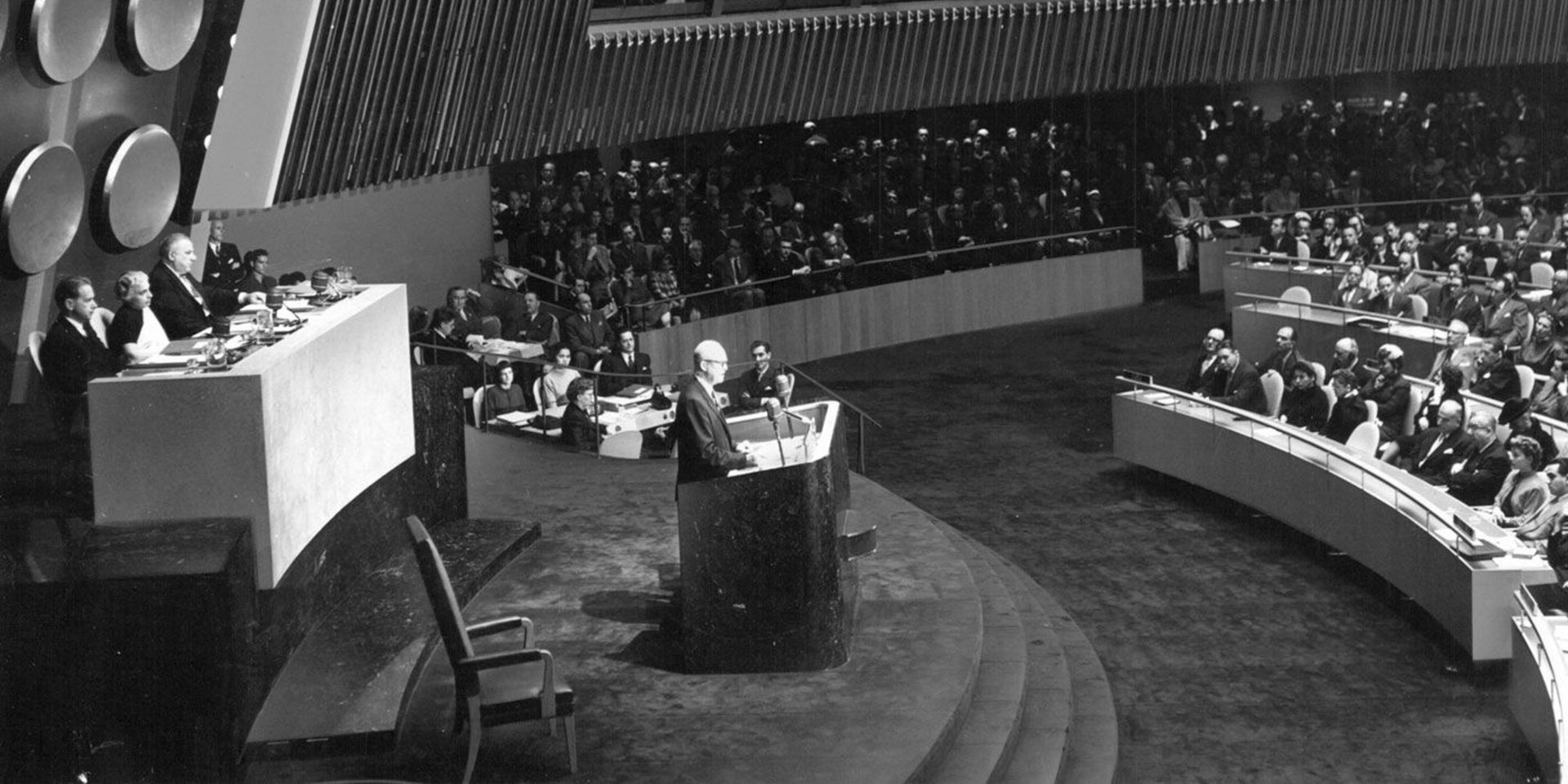
Flying above the continental United States, Eisenhower used that space to draft one of the most consequential speeches of the twentieth century. On December 8, 1953, he stood before the United Nations General Assembly and introduced a new vision for the atomic age:
"The United States pledges before you, and therefore before the world, its determination to help solve the fearful atomic dilemma…"
The initiative became known as Atoms for Peace. Its premise was both simple and unprecedented: that nuclear technology, rather than remaining solely an instrument of war, could be shared for civilian use—power generation, medical advancement, and scientific progress.
In 1957, that vision took institutional form with the creation of the International Atomic Energy Agency (IAEA), establishing a framework for global nuclear cooperation that continues to shape international policy today.
The origins of that framework trace back, in part, to a flight.
Quick Facts
Speech: “Atoms for Peace” (Dwight D. Eisenhower)
Date: December 8, 1953
Delivered at: United Nations General Assembly
Core idea: Shift nuclear technology toward peaceful, civilian use under international safeguards
Legacy: Helped shape the creation of the International Atomic Energy Agency (IAEA) in 1957
Why Columbine II matters: A symbol of presidential leadership in flight — and of using power with restraint
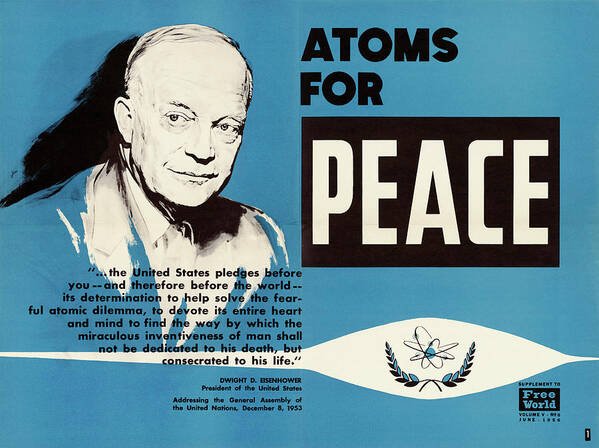
President Eisenhower’s Atoms for Peace message helped reframe the nuclear age around civilian use and international cooperation.
More Than a Plane
When Eisenhower traveled to advance Atoms for Peace, Columbine II became part of the message itself. A nation demonstrating that technological power could be paired with deliberate restraint sent that message most clearly not through words alone, but through the aircraft that carried its president—a flying demonstration of capability used in the service of peace.
In this way, the first aircraft used by a sitting U.S. president when the “Air Force One” call sign was first applied helped redefine what presidential flight could mean: not just movement, but influence. Not just reach, but responsibility.
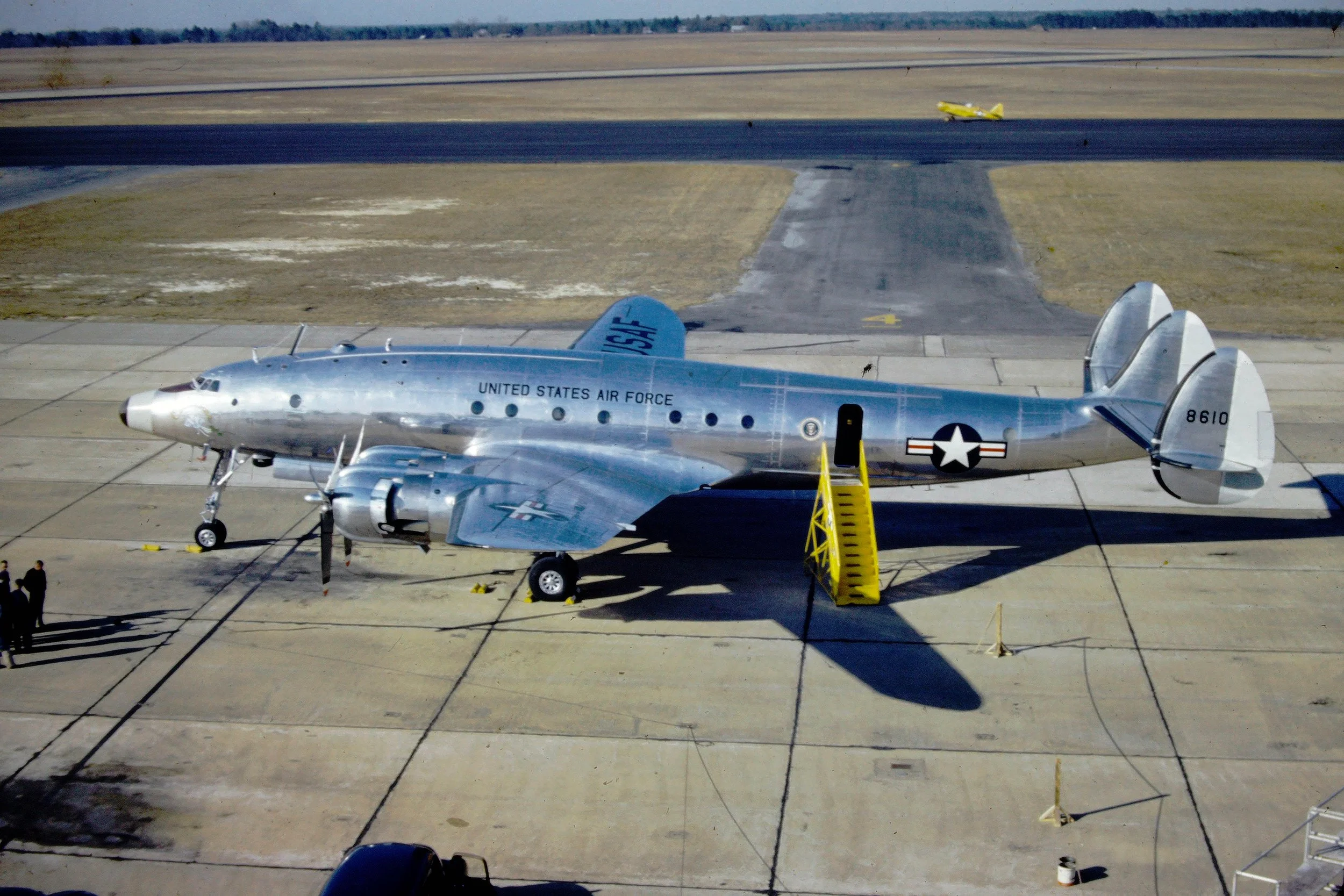
Columbine II in service — a tangible reminder that presidential flight can be both reach and responsibility.
A Legacy That Still Shapes the World
Columbine II represented the height of piston-engine innovation: fast, long-range, and built for precision. It carried President Eisenhower with the same dignity and purpose that later jet-powered aircraft would continue to uphold.
Seventy years later, Columbine II stands as a bridge between two eras — the twilight of propeller-driven flight and the dawn of the jet age—and as a symbol of a moment when humanity first sought to reconcile its greatest technological power with its greatest responsibility.
The framework Eisenhower proposed from that aircraft is still in place. The IAEA still operates. The questions he asked at altitude in 1953 are still being answered.
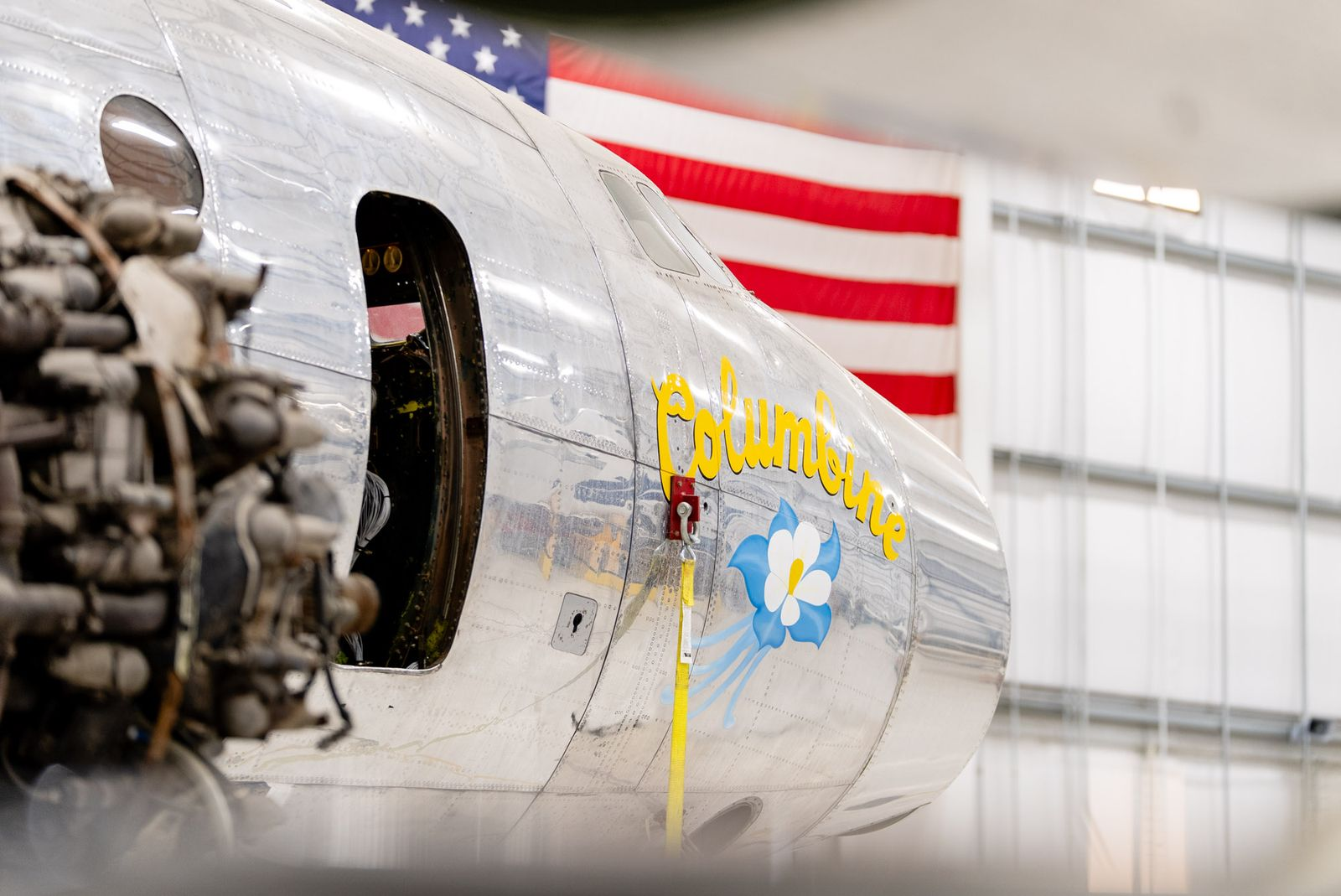
Preserving the Story
First Air Force One exists to ensure that story is not forgotten.
Because the lessons carried at 30,000 feet—about leadership, restraint, and the deliberate use of power—are not relics of another era. They are still shaping the world we live in today.
Curious where this restoration project is at now?
Sources
Eisenhower’s “Atoms for Peace” address (UN / historical transcript sources): https://www.iaea.org/about/history/atoms-for-peace-speech
IAEA history (creation and mission): https://www.iaea.org/about/history
Background on Columbine II / early Air Force One history: https://www.nationalmuseum.af.mil/Visit/Museum-Exhibits/Fact-Sheets/Display/Article/195963/columbine-ii/