Early in his presidency, Dwight D. Eisenhower flew aboard Columbine II, the Lockheed Constellation that became the first aircraft to use the call sign Air Force One. Over his career, he'd watched aviation grow from a young technology into something both the military and the White House relied on. By his second term, the conversation had moved past the atmosphere. The Space Race was underway, and in 1958 Eisenhower signed the law that created NASA. Here's how those two stories connect.
Eisenhower, Columbine II, and the Evolution of Flight
By the time Eisenhower entered the White House in 1953, aviation had already played a major role in his life. As a military officer and later Supreme Allied Commander during World War II, he had witnessed the growing importance of air power firsthand.
Once he was President, aircraft became part of how Eisenhower ran the office. He traveled often by air, and in his first years in office, Columbine II carried him on many of those trips.
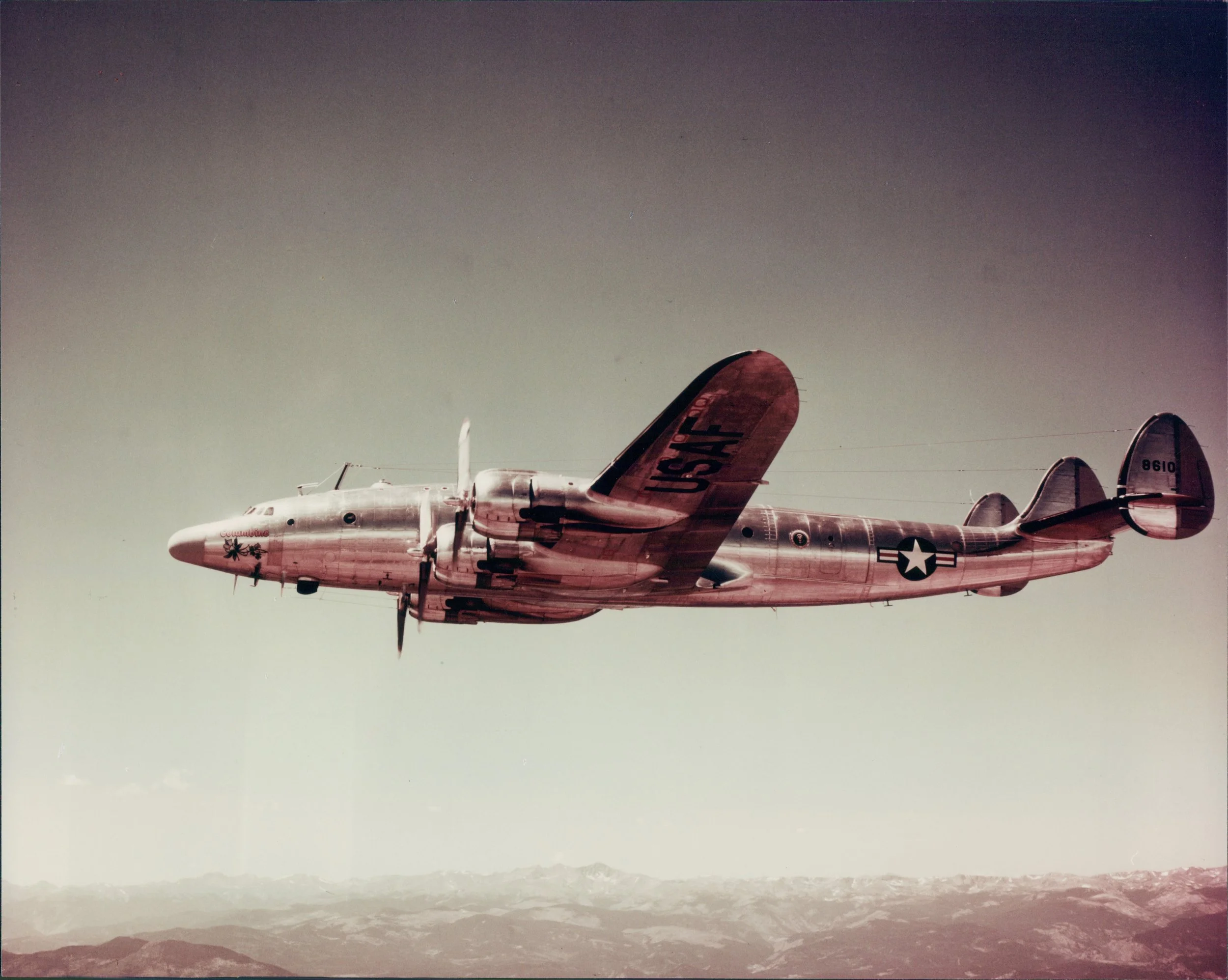
Columbine II showed how far presidential aviation had already come. Its long range, communications equipment, and custom interior let Eisenhower and his staff keep working while they traveled, so the plane doubled as an office in the air.
The technology around it kept changing, too. Jet aircraft were transforming military and commercial aviation, and helicopters were becoming a real option for presidential travel. In July 1957, Eisenhower became the first president to fly in a helicopter. That flight to Camp David showed how quickly new kinds of aircraft were becoming part of the job.
From Aviation to the Space Race
On October 4, 1957, the Soviet Union launched Sputnik, the world's first artificial satellite. It kicked off the Space Race and raised hard questions about where the United States stood in science and technology.
Eisenhower's administration had already supported an American scientific satellite program as part of the International Geophysical Year. In January 1958, the United States successfully launched Explorer 1, its first satellite.
Those two launches, only a few months apart, pushed the country to think about flight on a much bigger scale.
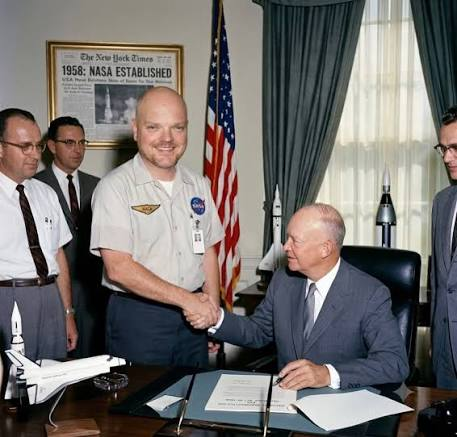
Eisenhower and the Creation of NASA
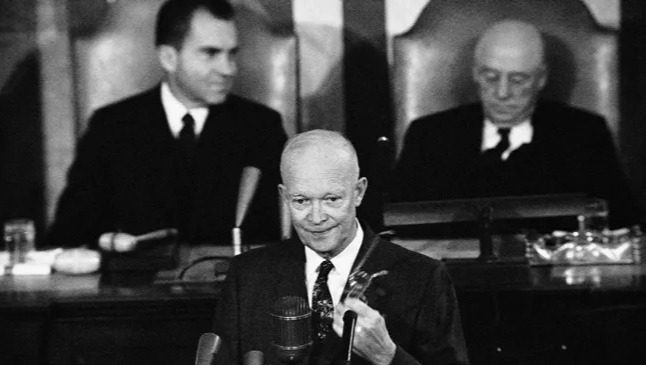
In April 1958, Eisenhower called on Congress to establish a civilian organization responsible for America's space program. His proposal built upon the work of the National Advisory Committee for Aeronautics, or NACA, which had conducted aeronautical research since 1915.
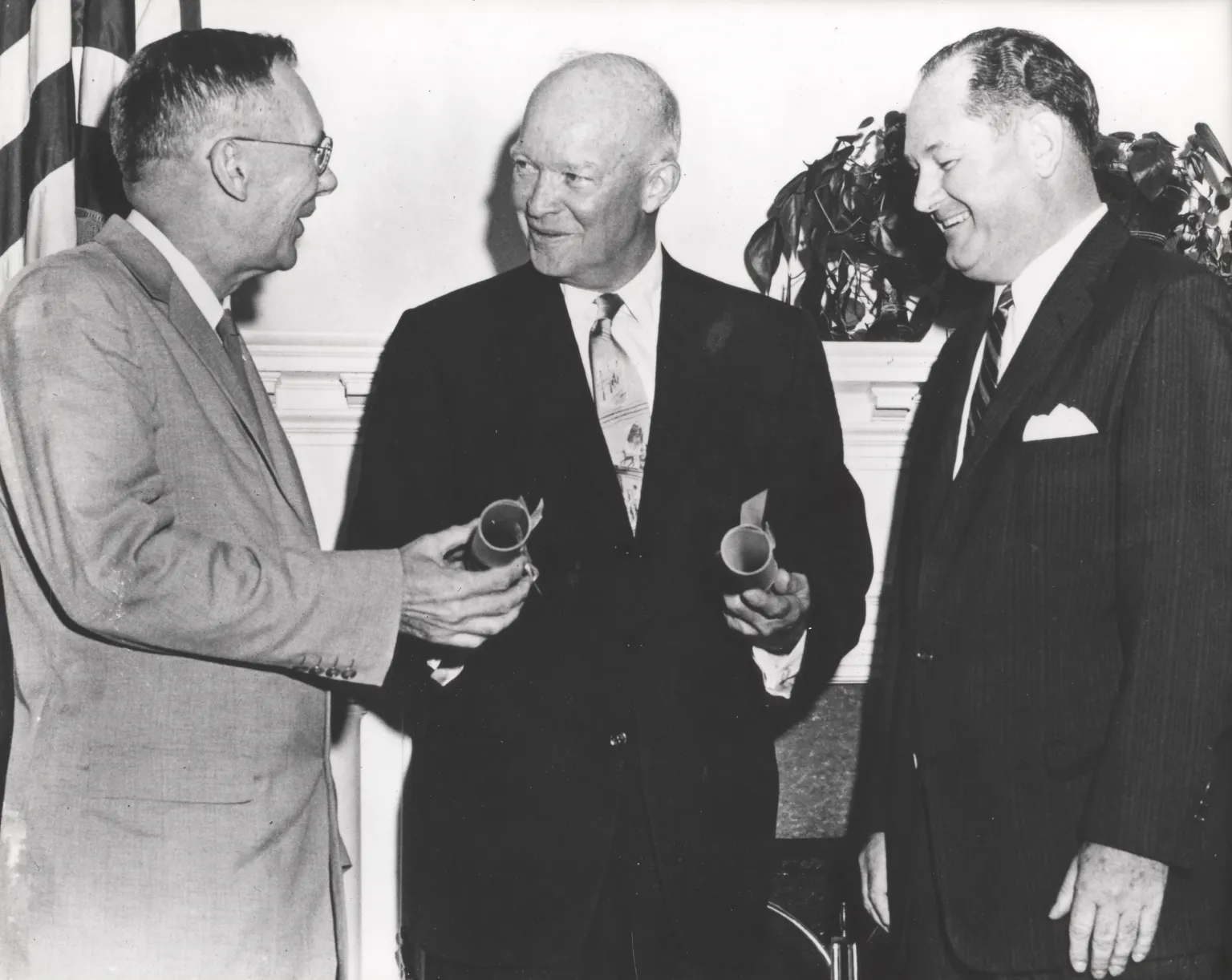
On July 29, 1958, Eisenhower signed the National Aeronautics and Space Act of 1958 into law, establishing the National Aeronautics and Space Administration.
NASA officially began operations on October 1, 1958, bringing together existing aeronautical and space research under a new civilian agency. Its work would soon lead to increasingly ambitious missions, including human spaceflight and, eventually, the Apollo program.
Eisenhower left office in January 1961, before the first American astronaut orbited the Earth and nearly a decade before the first Moon landing. Those missions grew out of the agency he signed into law.
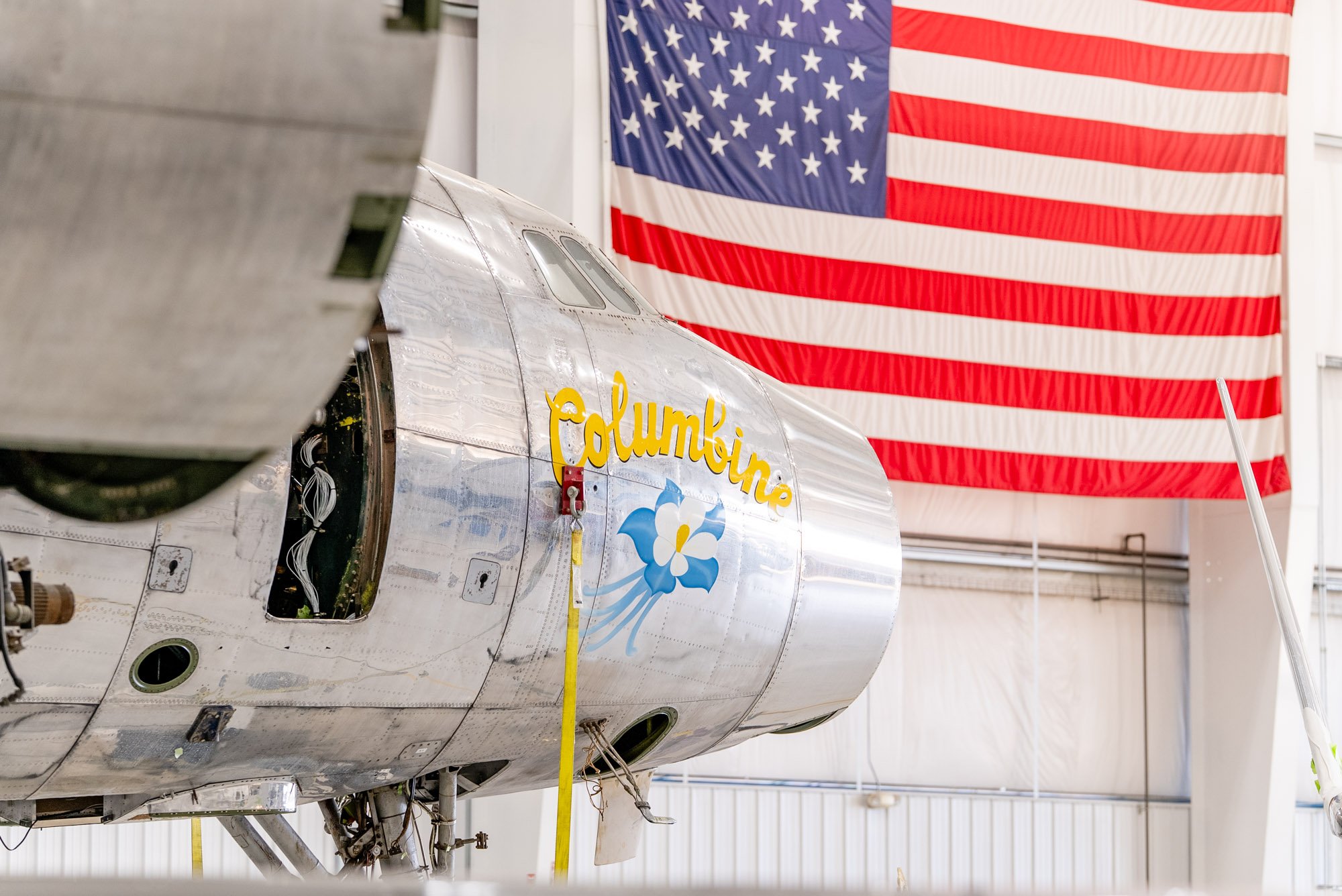
Stripped of its engines but shielded from the elements, the Columbine II now rests securely inside a modern Virginia hangar where painstaking restoration efforts are slowly breathing new life into America's first Air Force One.
How NASA Fits Into the First Air Force One Story
NASA and Columbine II come from the same decade, a stretch of the 1950s when flight was changing fast. Columbine II carried Eisenhower early in his presidency and was the first aircraft to use the Air Force One call sign, which makes it the starting point for modern presidential air travel. The satellite launches and the creation of NASA later in the decade came out of that same push in aviation.
That's a big part of why the restoration matters, because it keeps the aircraft, and the history around it, available for people to see in person.