
Conversion into VC-121A "Columbine II"
Before the jet age transformed aviation, presidential travel relied on the very best piston-powered aircraft of the time. Beginning in 1952, President Dwight D. Eisenhower flew aboard Columbine II, a VC-121A—the military variant of the Lockheed Constellation. Graceful, powerful, and ahead of its time, Columbine II was the most advanced piston-engine transport aircraft in the world when it entered presidential service.
A Design That Shaped the Skies
The Lockheed Constellation, nicknamed the “Connie,” was designed to perform efficiently at higher altitudes than most piston aircraft could reach. Its signature "dolphin-shaped" fuselage wasn't just for looks. The curved shape reduced aerodynamic drag and supported a structurally efficient pressurized cabin, helping the aircraft cruise smoothly at 20,000 feet, well above most weather systems. That pressurization gave passengers a far more comfortable flight experience than earlier planes allowed.
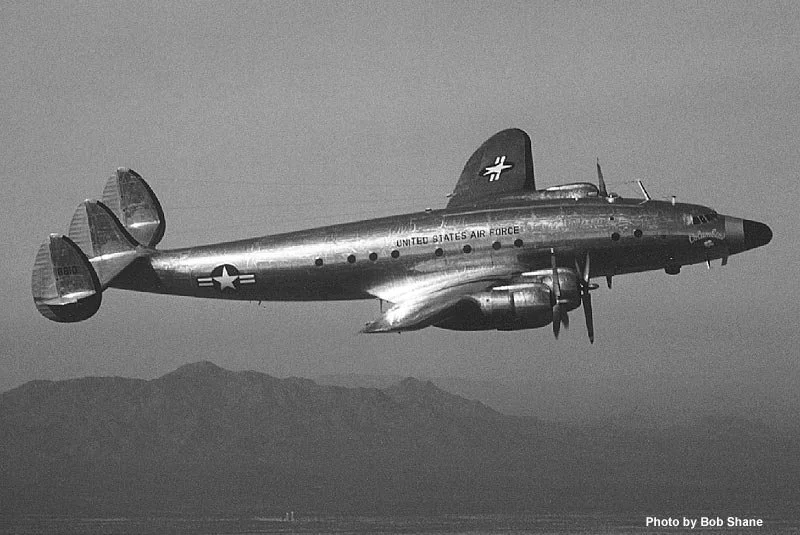
The Triple Tail Solution
The Connie's size demanded a large vertical tail for directional control. Engineers needed substantial vertical surface area to handle a 123-foot wingspan, but one big fin would have been too tall for 1940s-era hangars. Lockheed’s elegant solution was the triple-tail configuration: a set of three smaller fins that provided the same control authority without exceeding height limits. The look became an instant icon of mid-century aviation design.
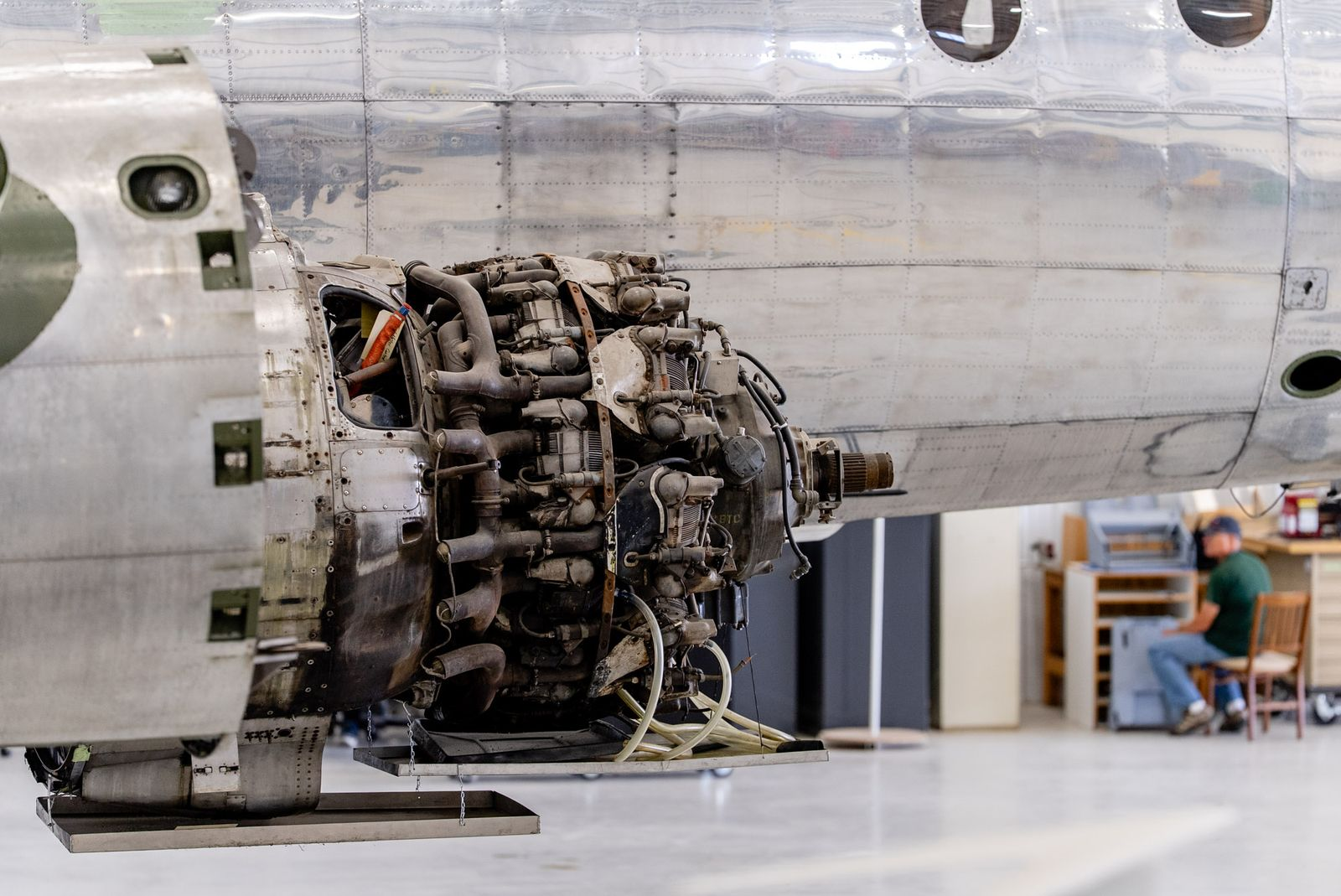
Power and Performance
Moving Columbine II through the sky required some serious power. Four Wright R-3350 Duplex-Cyclone radial engines—each an 18-cylinder, twin-row radial with a two-speed supercharger—produced approximately 2,500 horsepower apiece. Together, they gave the aircraft a cruising speed of roughly 300 miles per hour and the range needed for long-distance executive travel. This combination of power and reliability made the Constellation the ideal aircraft for a president whose duties spanned the globe.
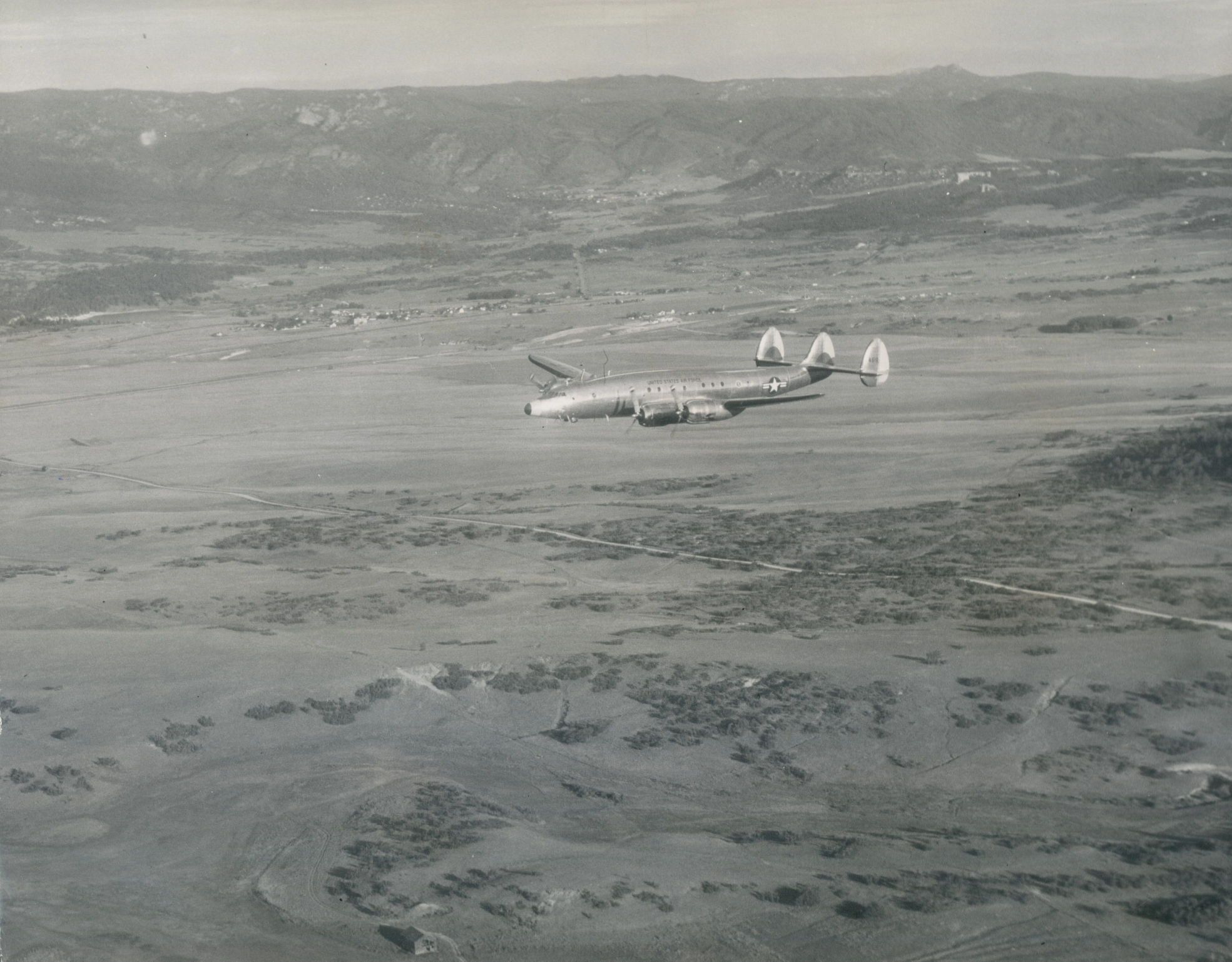
A Lasting Legacy
Columbine II represented the height of piston-engine innovation: fast, long-range, and built for comfort. It carried President Eisenhower with the same dignity and precision that later jet-powered aircraft would continue to uphold.
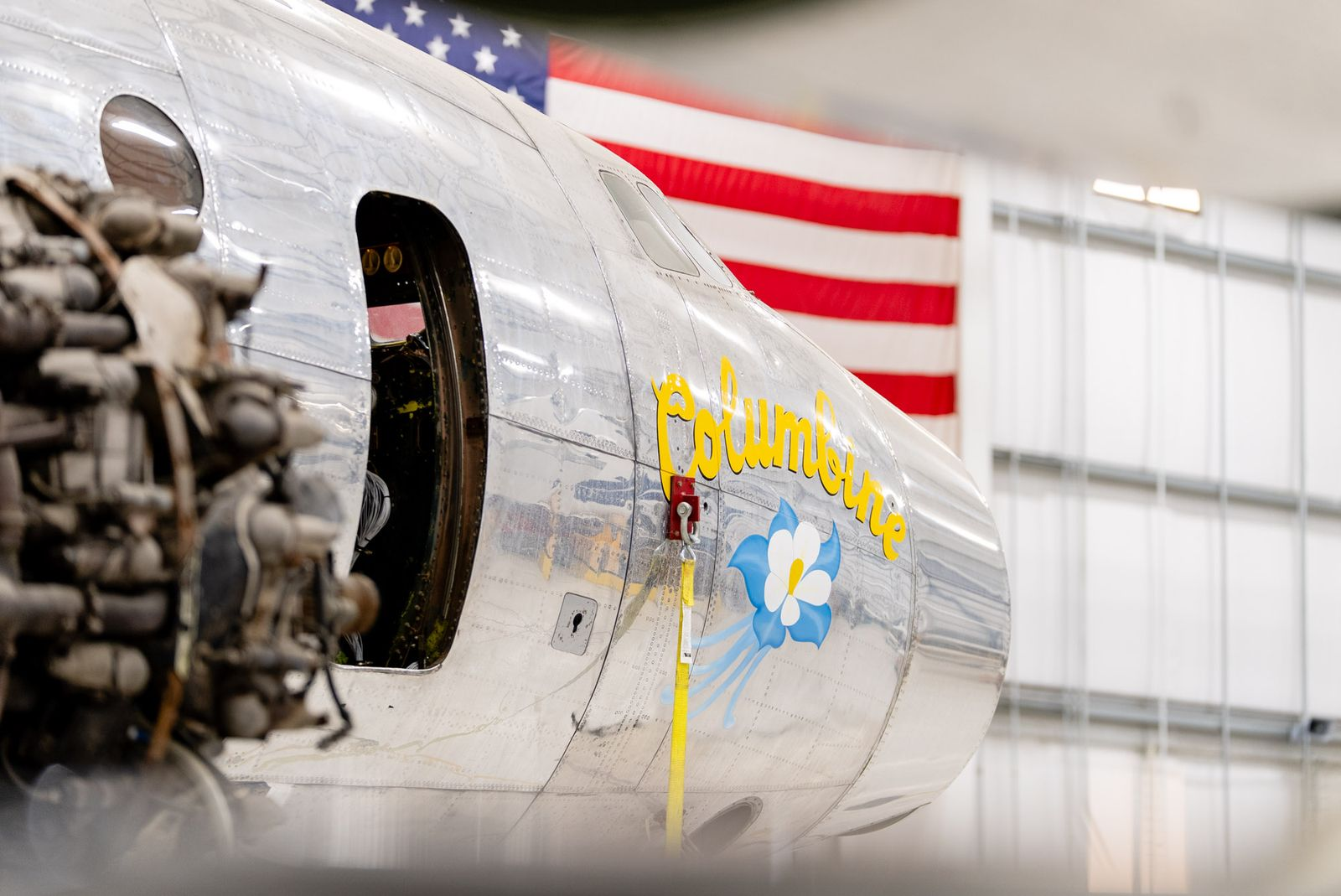
Today, Columbine II stands as a bridge between two eras: the twilight of propeller-driven airliners and the dawn of jet-powered flight. Its story is a reminder that before technology took to new heights, American ingenuity had already learned to soar.