
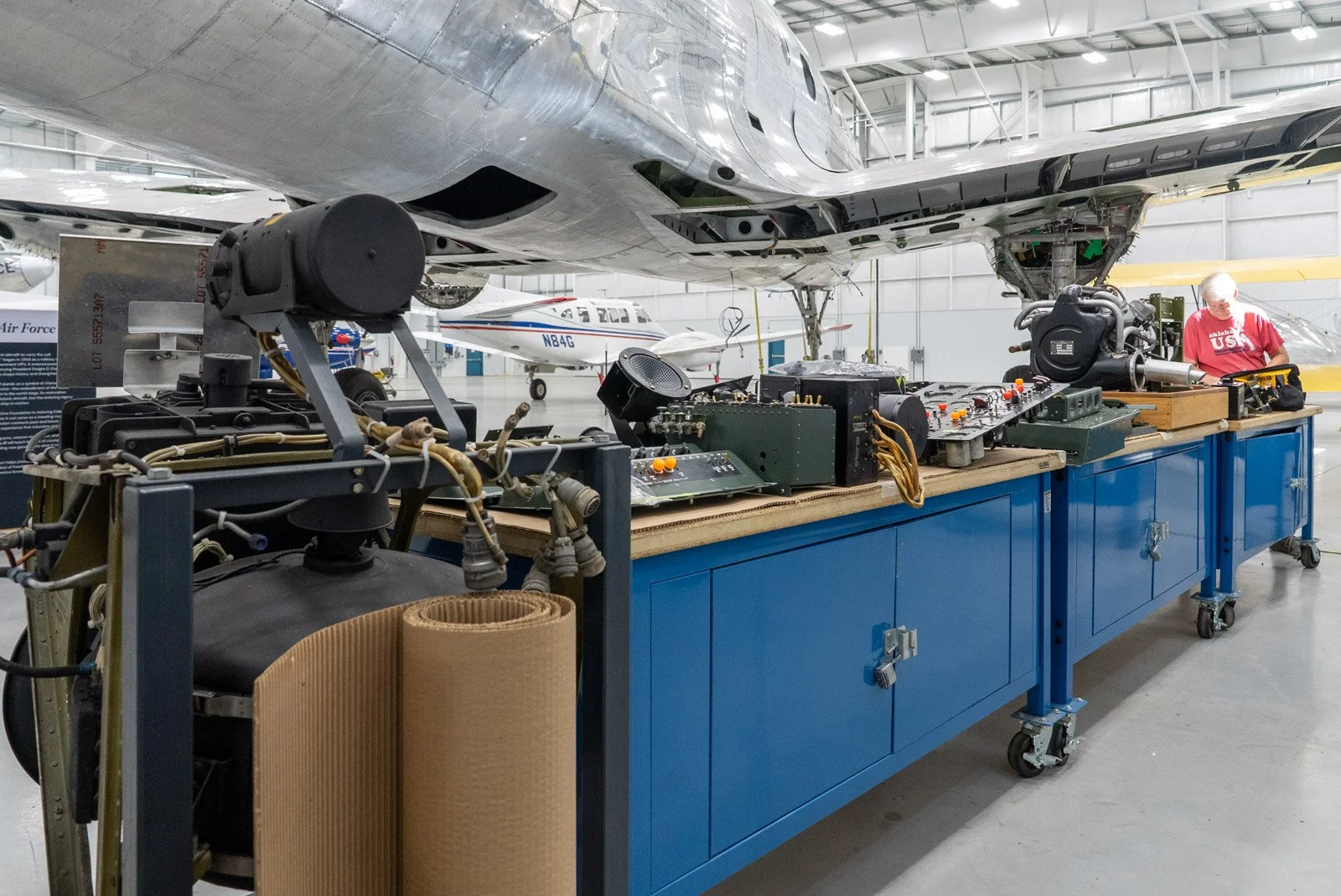
Inside a cleaner, quieter hangar, the meticulous resurrection of American aviation history is quietly unfolding. Bill Borchers, the interior restoration lead for the Columbine II, and his volunteer crew finally have the space to lay out the delicate components, specialized tools, and physical evidence required for their mission. The relocation provides the necessary environment to study parts and work continuously without the constant need to break down and rebuild their setup, clearing the way to reconstruct the presidential cabin exactly as it was.
Engineering a Space for Precision
Restoration of this historical magnitude requires significant room to think and execute. The workspace now features a fleet of new rolling worktables, each engineered with integrated internal air lines. By plugging in a single line, the team can run pneumatic tools directly at the table surface to handle a continuous cycle of drilling, sanding, grinding, cutting, and riveting. Underneath, built-in storage shelves keep pieces in progress and finished components perfectly preserved.
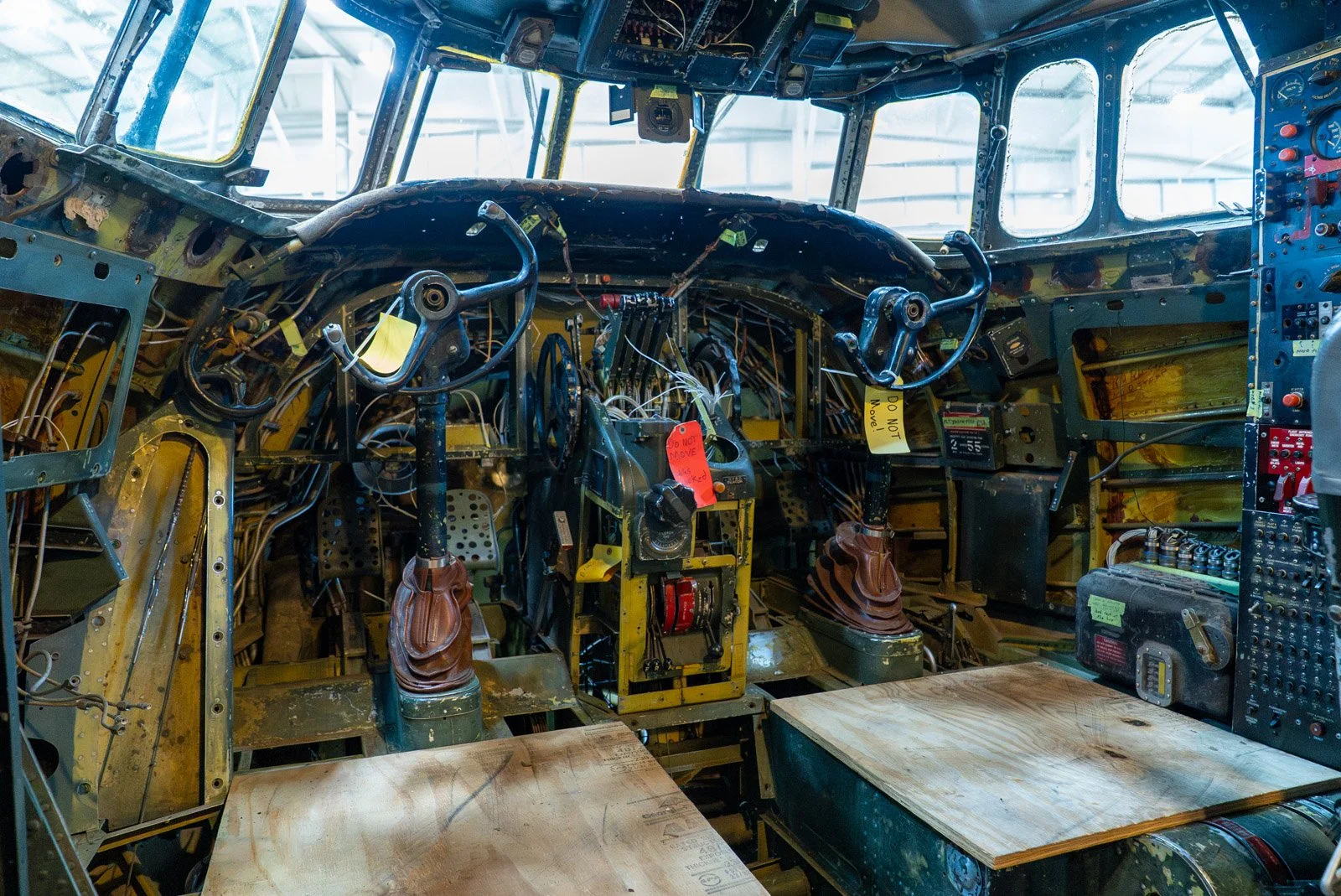
Work on the rear interior has paused as the team shifts its immediate focus forward into the cockpit. The crew has systematically removed almost every component from the flight deck. Circuit breakers, breaker panels, and switches are being entirely disassembled, refurbished, and repainted. After exhaustive investigation, the team successfully identified the original paint color of the cockpit, allowing them to rebuild the entire flight deck in its true historical shade.
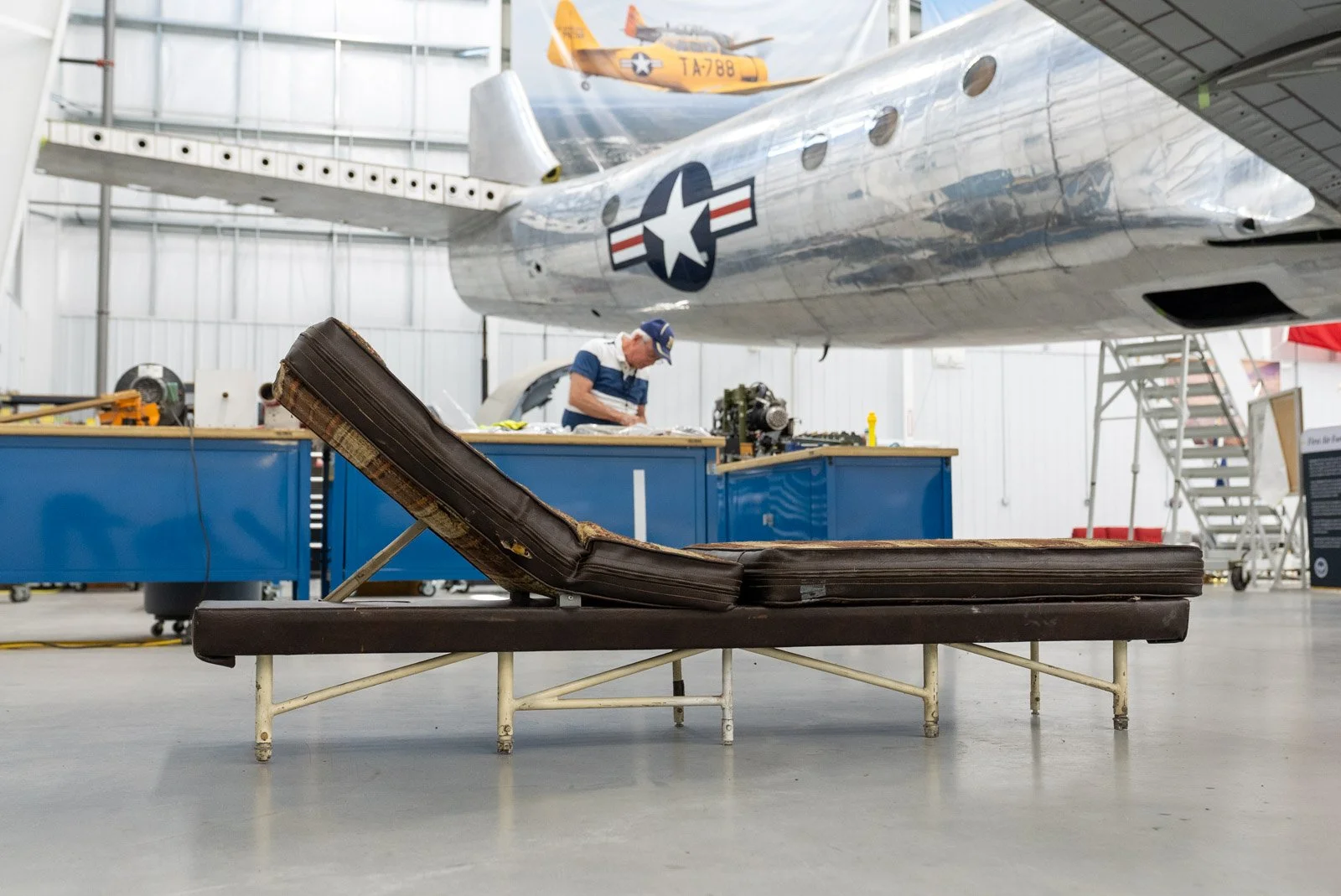
Further back in the cabin, the physical history of the Eisenhower era is being painstakingly recreated. The team is currently sourcing couches similar to the ones used by President Eisenhower and his spouse. The plan is to strip them to the bare frame, remove old paint, and rebuild them with superior cushioning and period-accurate materials.
Rebuilding Where the Archives Fail
The process is frequently a battle against missing information. The original blueprints preserved in the National Archives proved incomplete because a large portion of the microfiche had degraded over time. Without a complete paper trail, the team relies heavily on historic photographs and surviving sister aircraft for reference.
This forensic approach is highly visible in the Pullman staterooms, where the lower seats convert to berths and additional beds drop down from the ceiling. Borchers spent two months hand-fabricating a single ceiling bed using nothing but sheet metal and archival photographs, carefully bending every angle and driving every individual rivet himself.
The aircraft's furniture presents its own unique spatial challenges:
Custom Dimensions: The original seats are exactly two inches narrower than standard aircraft seating, altering what can fit into the cabin.
Historical Modification: The crew must carefully alter modern backrests and reshape padding to fit these specific dimensions.
Physical Evidence: When an original cushion surfaced, still wearing its authentic fabric, it provided the team with an invaluable baseline to match the exact colors and textures of the era.
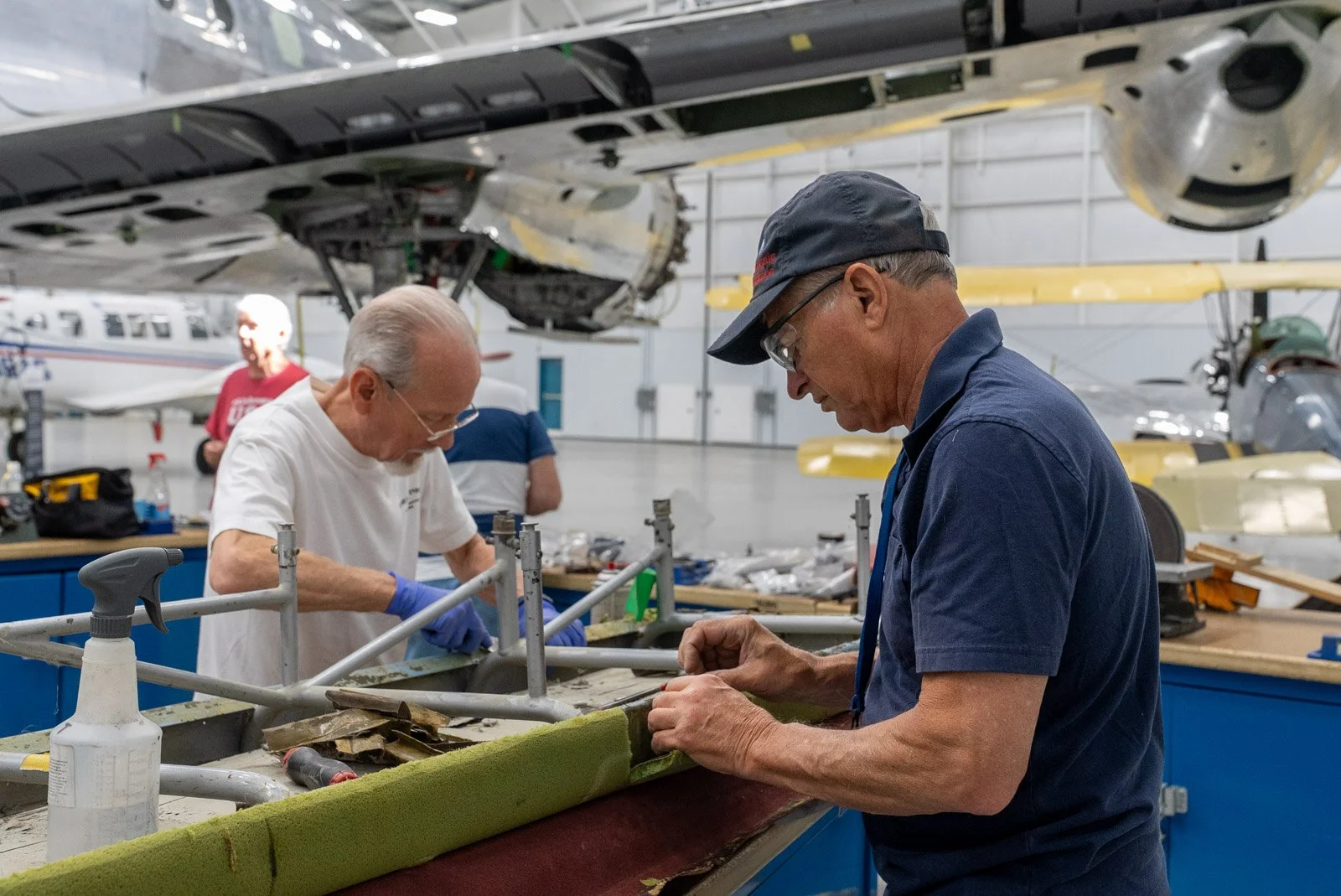
Borchers operates alongside five dedicated volunteers who rotate throughout the week. Together, they perform the quiet, exacting labor that future visitors will never consciously see, but that the aircraft cannot live without. The ultimate goal is an immersive historical experience, allowing visitors to step aboard the Columbine II and view the cabin precisely as it appeared decades ago.
Support the Journey of Columbine II
The resurrection of the Columbine II relies entirely on skilled craftsmanship, specialized materials, and the slow, deliberate work of undoing decades of decay. This massive restoration project requires ongoing support to keep moving forward. You can help preserve this vital piece of history by following these updates, sharing this story, or making a donation to the restoration project today.