A New Home and A Clean Slate
Big things are happening with the First Air Force One — and we're thrilled to pull back the curtain on the progress being made. The Connie is moving through a series of major milestones, and each step brings this iconic aircraft closer to the restored legacy she deserves. Here's a look at what's been happening behind the scenes.
A Decade in the Making
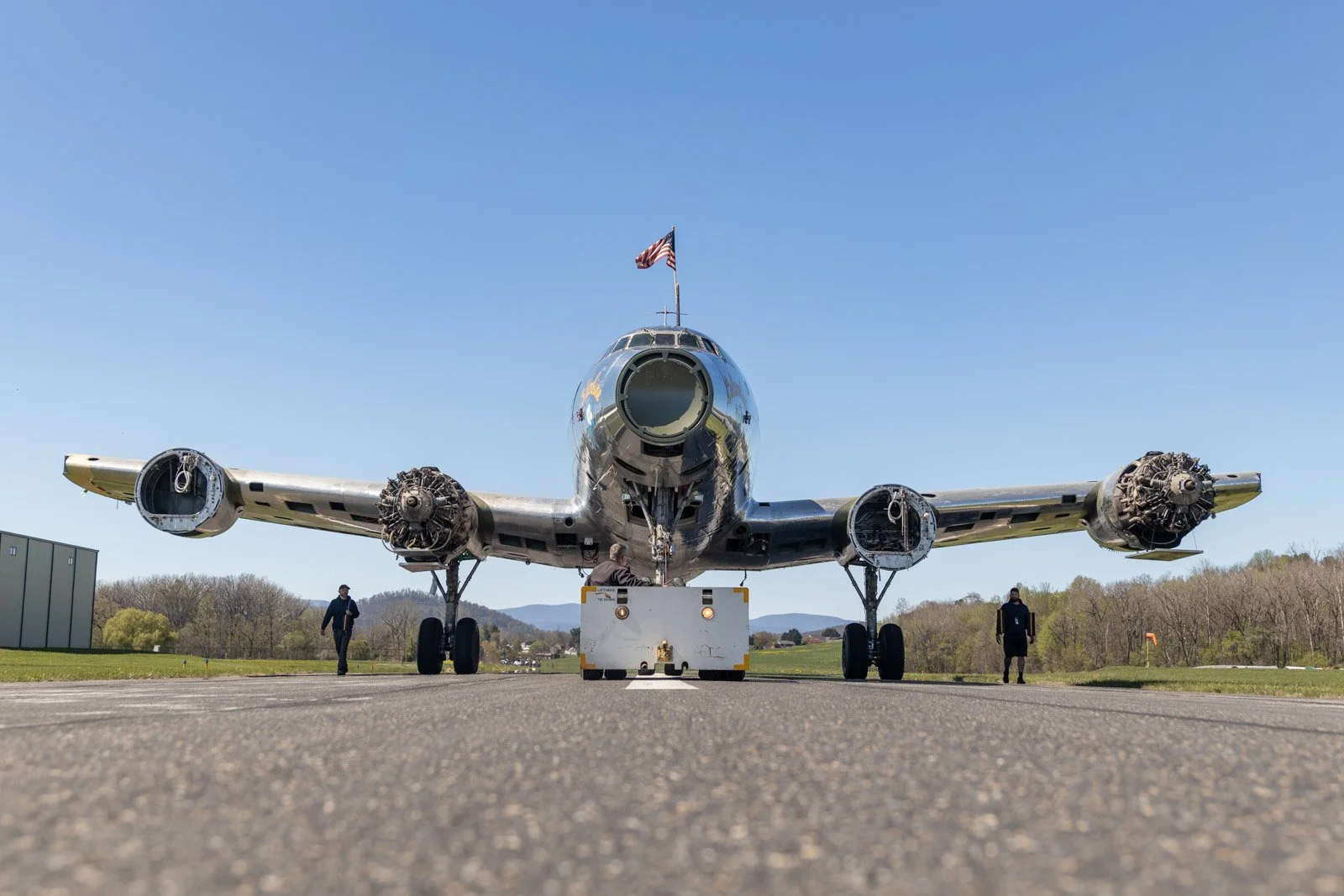
For the first time in a decade, the First Air Force One was moved — and it was a milestone worth celebrating. Columbine II was relocated to a new hangar, where she now sits alongside other historic aircraft like the Miss Virginia. It only took 10 years, but she finally got a chance to bask in the sunlight. It was truly a moment the entire team won't soon forget.
A Fresh Start: The Exterior Wash
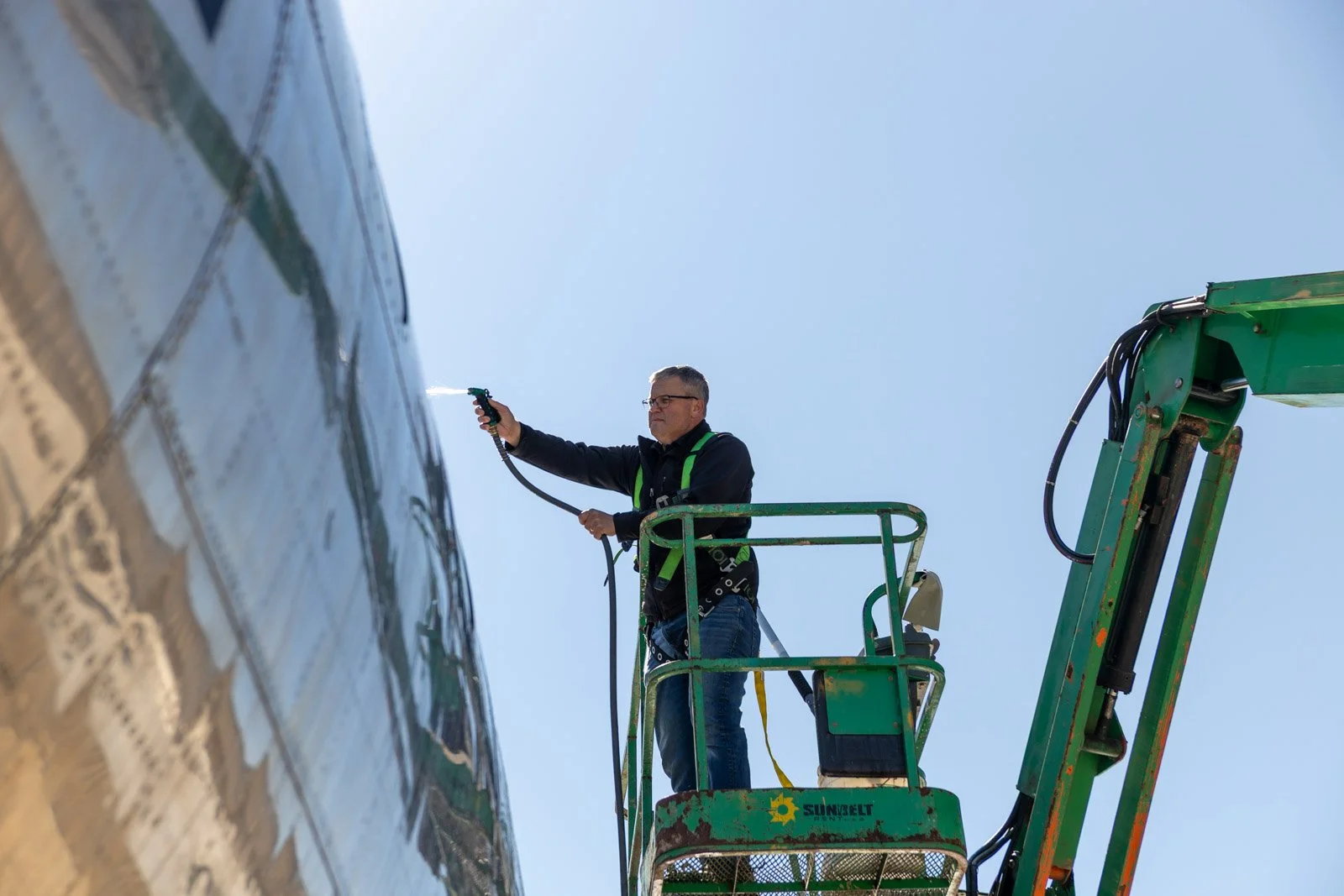
Before heading into her new home, the Connie received a thorough exterior wash. This careful cleaning set the stage for the restoration phases ahead, clearing away years of buildup and giving the team a clean foundation for the real work to begin.
Inside the Cockpit: Surface Prep Underway
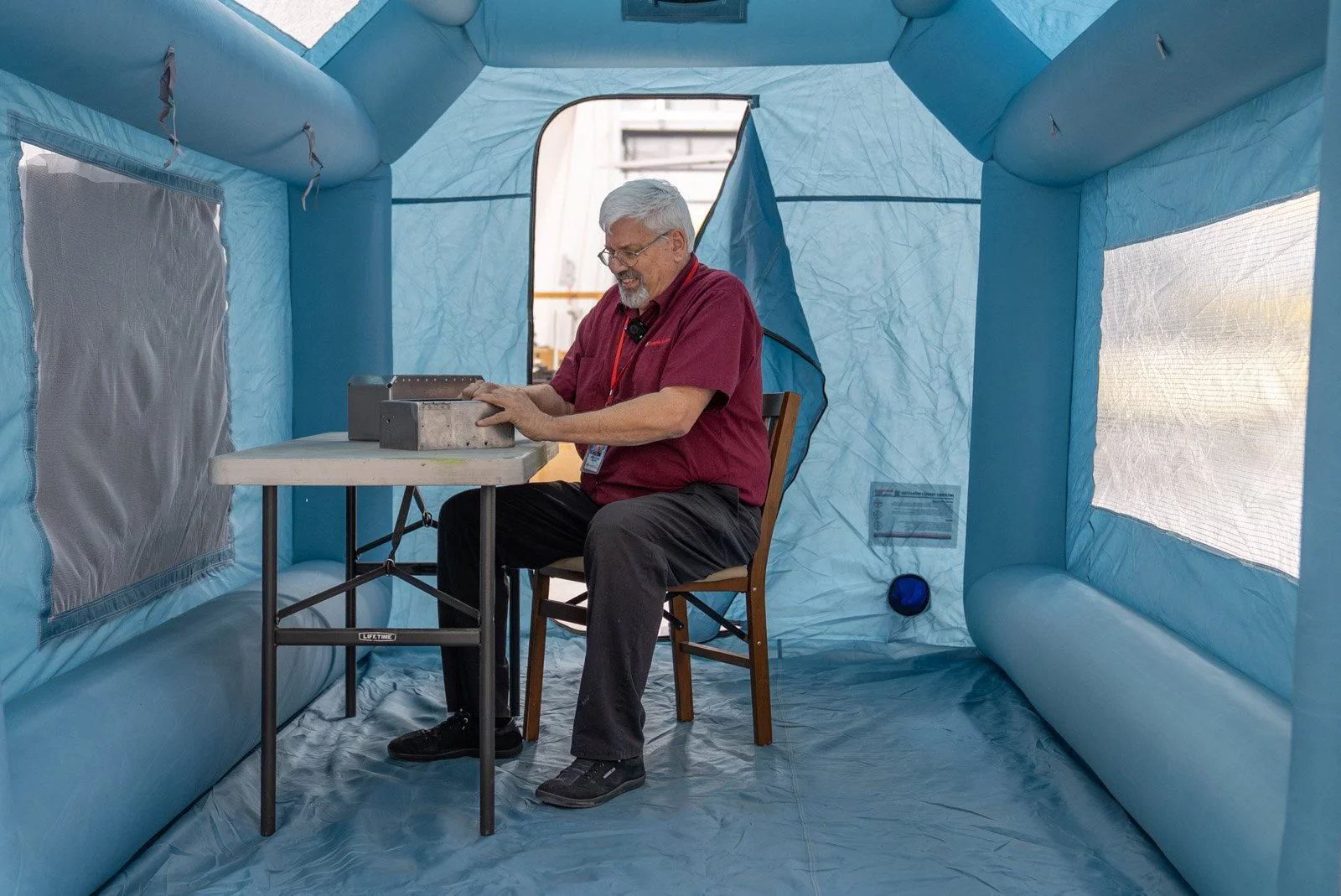
With the aircraft settled in her new hangar, attention has turned to the interior. The team is currently focused on cleaning the cockpit surfaces in preparation for priming and painting. This involves removing dust and debris, working carefully around fixtures that can't be taken out, and executing detailed spray work to achieve a clean, restored finish. A portable paint booth has been set up inside the hangar to contain sanding dust and control paint particulate: protecting both the crew and the aircraft throughout the process. Simultaneously, specialists are upholstering and building the furnishings — beds, seating, and other pieces — that will be installed once restoration is complete.
Preserved in Place: Honoring What Can't Be Restored
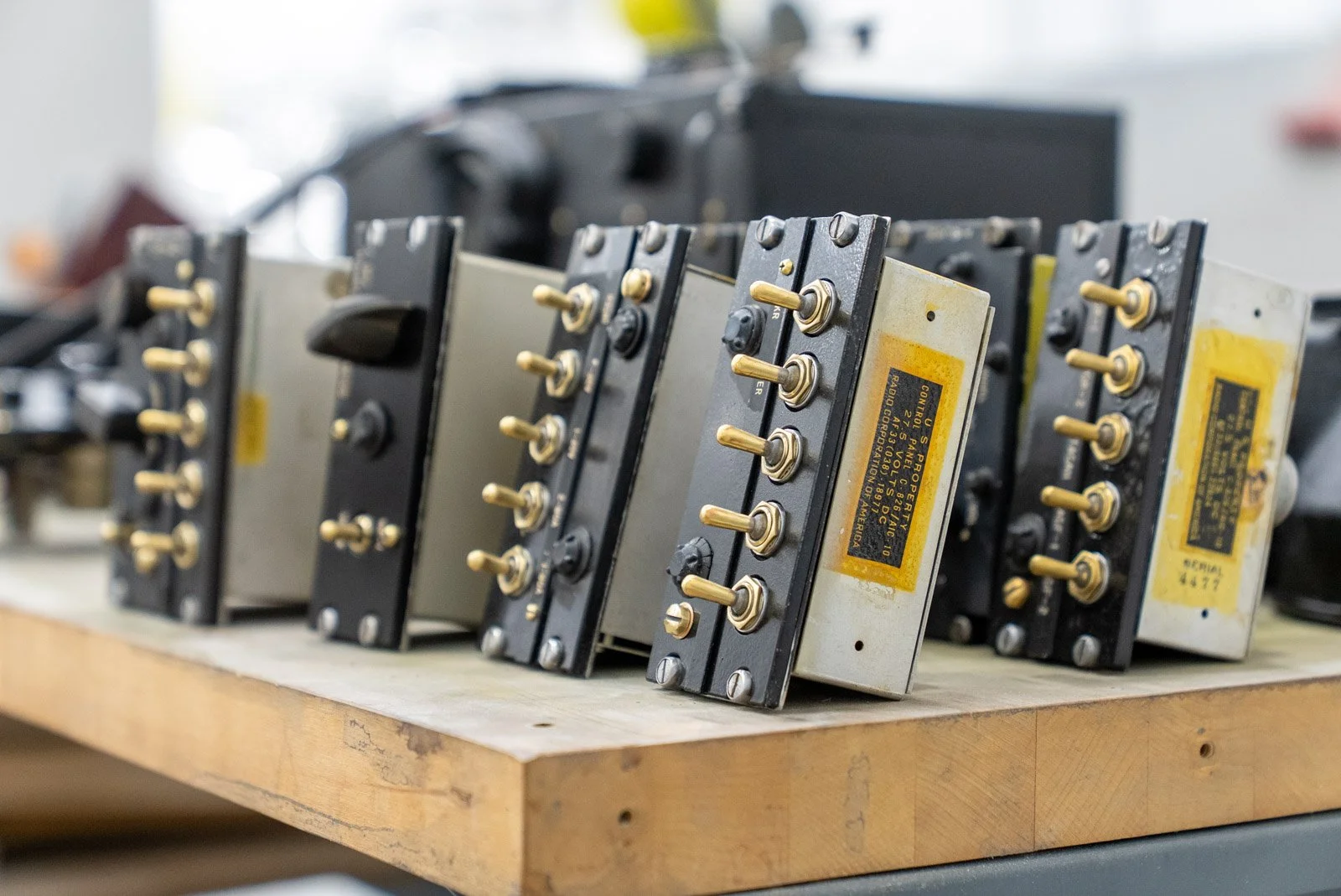
Not every original system can be returned to service and preserving the aircraft means making decisions that honor both authenticity and safety. The autopilot and pressurization systems are being permanently removed, as reactivating them would place too much stress on an airframe of this age. However, the original autopilot control panel will be carefully refurbished and returned to its place in the cockpit, preserved as a piece of living history.
Be Part of the Story
Each phase of this work brings us closer to the finish line and we're honored to be the stewards of such a monumental piece of history. Want to support the next phase of restoration? Find out how your donation can leave a permanent impact.