Door Repairs, Window Restoration, and Navigator Panel Progress
Restoring Columbine II, the first aircraft to carry the call sign “Air Force One,” requires patience, precision, and creative problem-solving. Recent work has focused on reassembling an aircraft door, restoring its acrylic window, and rebuilding the navigator’s instrument panel.
Each completed component moves Columbine II closer to returning to the air as a flying museum where people can experience the aircraft that carried President Dwight D. Eisenhower.
Reassembling an Original Aircraft Door
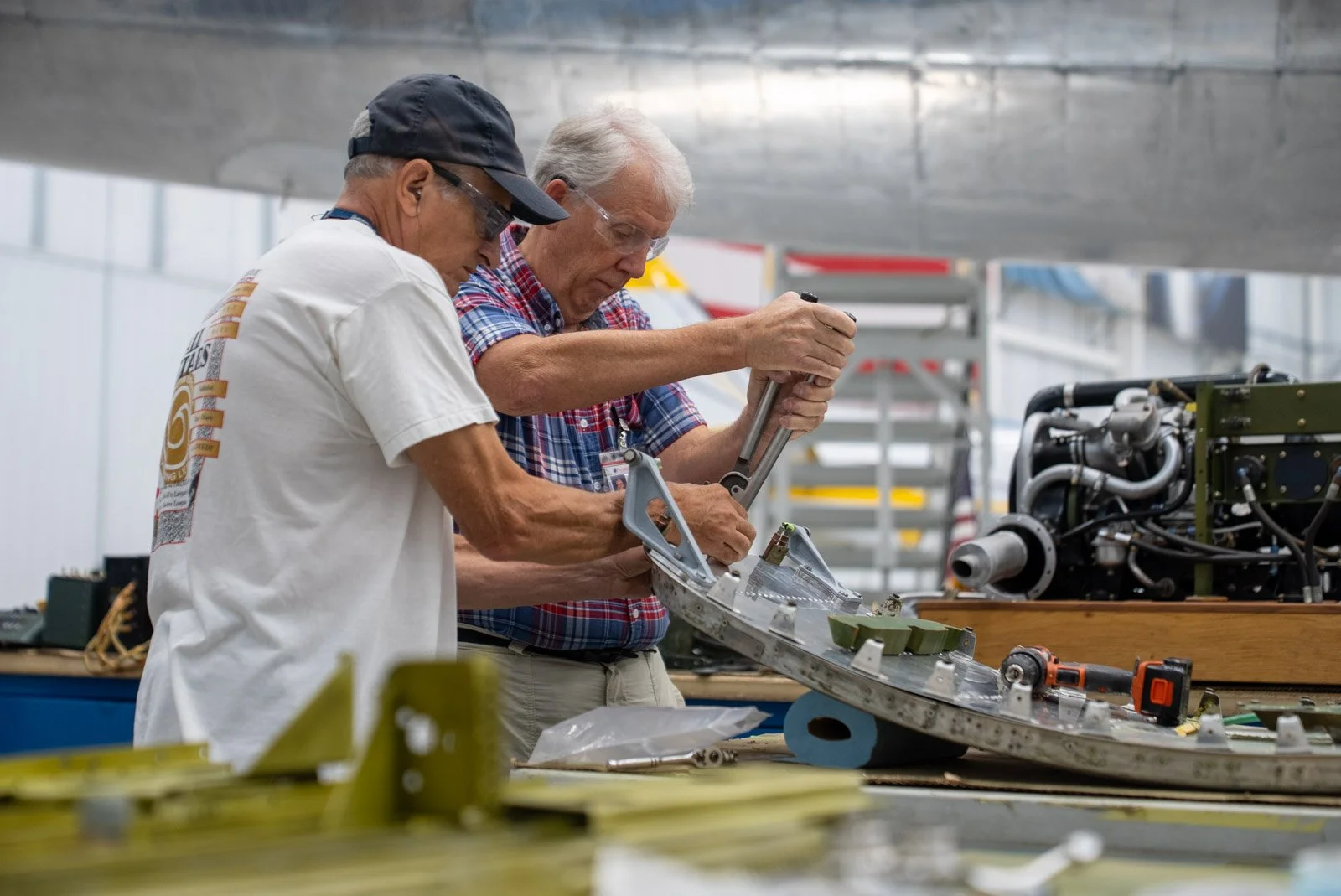
Repairs to the inside of the door are complete, and the restoration team is reinstalling its outer skin with new rivets. Once reassembly is finished, the door will be returned to Columbine II and tested to confirm that it fits and operates correctly.
The work began months ago by stripping the old paint and removing the skin to reach the interior, where the team found cracks in four spots, including each corner where the window guides mount. Before disassembly, the interior was documented in detail with photographs, and those images now serve as the reference for putting everything back together, from the door seal to the window and locking mechanisms.
Restoring Clarity to an Acrylic Window
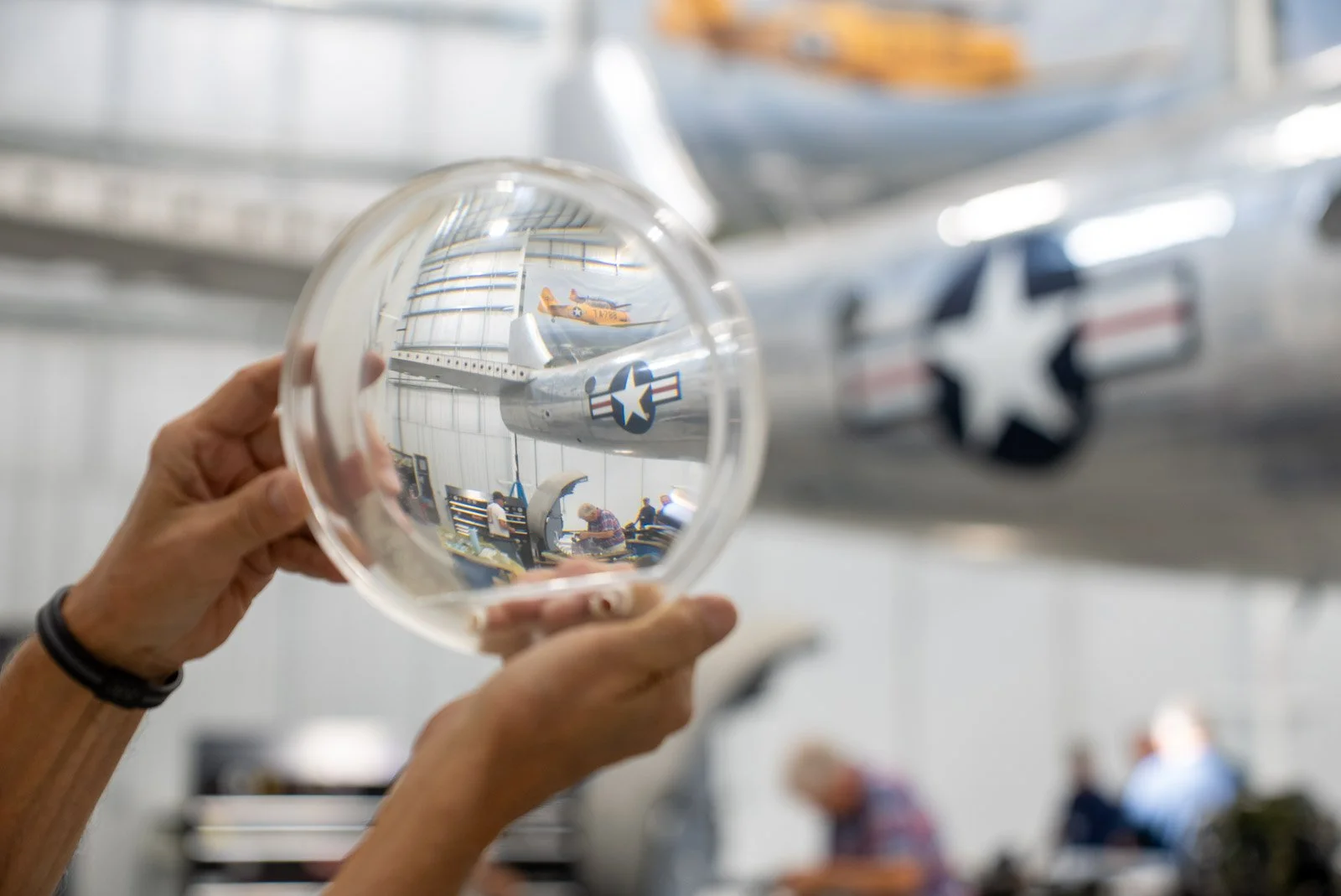
Years of exposure caused extensive crazing across the door’s acrylic window. These fine surface cracks had become so severe that it was difficult to see through the material.
Rather than replace the original window, the team restored it. The team carefully sanded away the damaged surface, moving from 80-grit abrasive through progressively finer grits up to 12,000. Fine-scratch polish and a final finishing polish restored its clarity.
The seals will be inspected before the window is reinstalled in the door.
Rebuilding the Navigator’s Instrument Panel
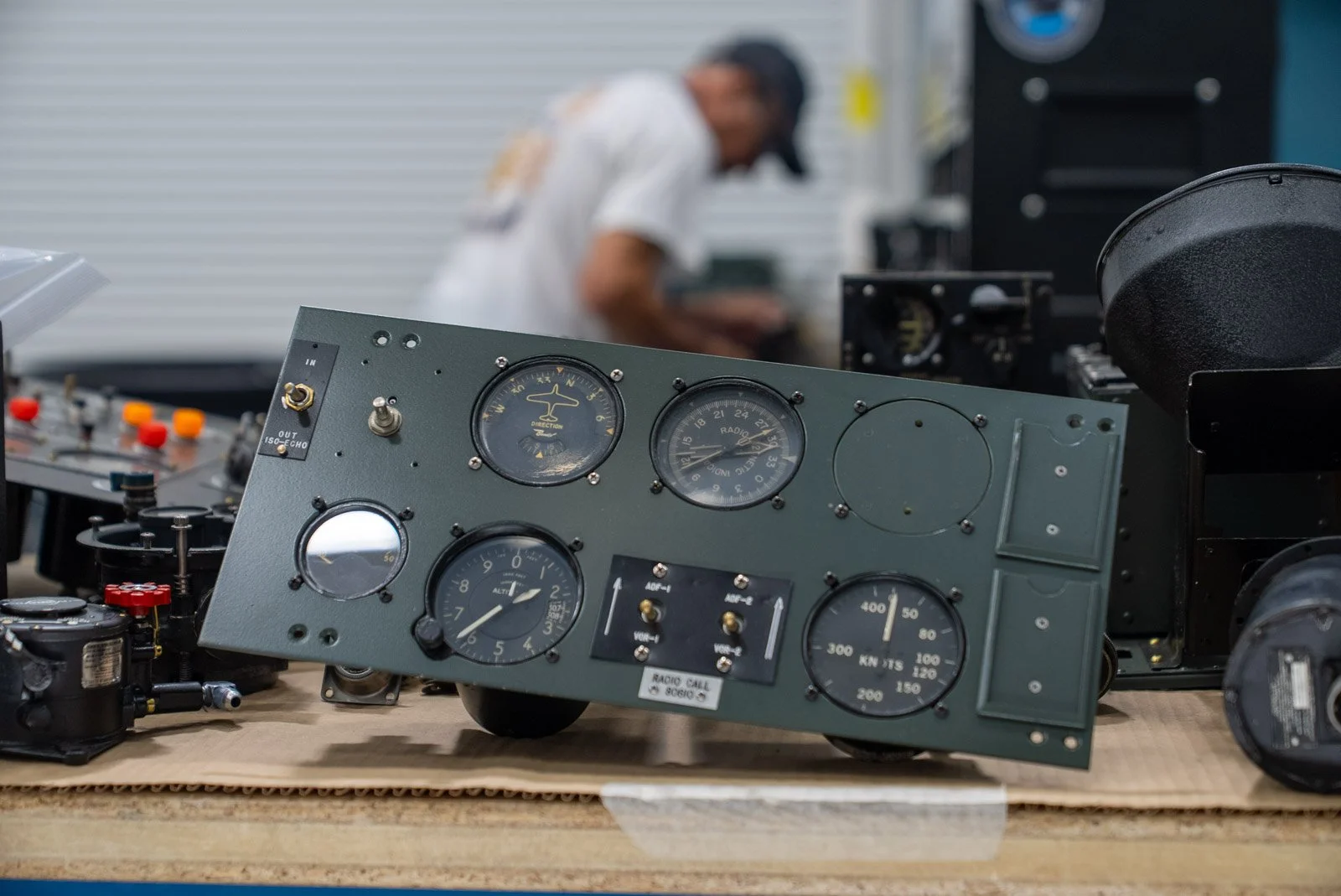
Work is also progressing at the navigator's station. The panel includes a compass, altimeter, airspeed indicator measured in knots, temperature gauge, and radio-navigation equipment.
Most of the assembly has been removed so its individual pieces can be restored and rebuilt on a worktable. One section remains fastened to the aircraft's structure, so the team must strip and rebuild it in place before reconnecting the complete panel.
Eight original vibration dampeners support the panel and protect its instruments from movement during flight. These components are approximately 80 years old and no longer manufactured, and the rubber elements inside have deteriorated, so the team will replace the rubber inside the existing dampeners.
The same hands-on approach applies to the radio and navigation equipment that came out of the desert with the aircraft. Each piece is cleaned, reworked, and rebuilt to look original, even though it will not be operational when Columbine II flies again.
Precision That Preserves History
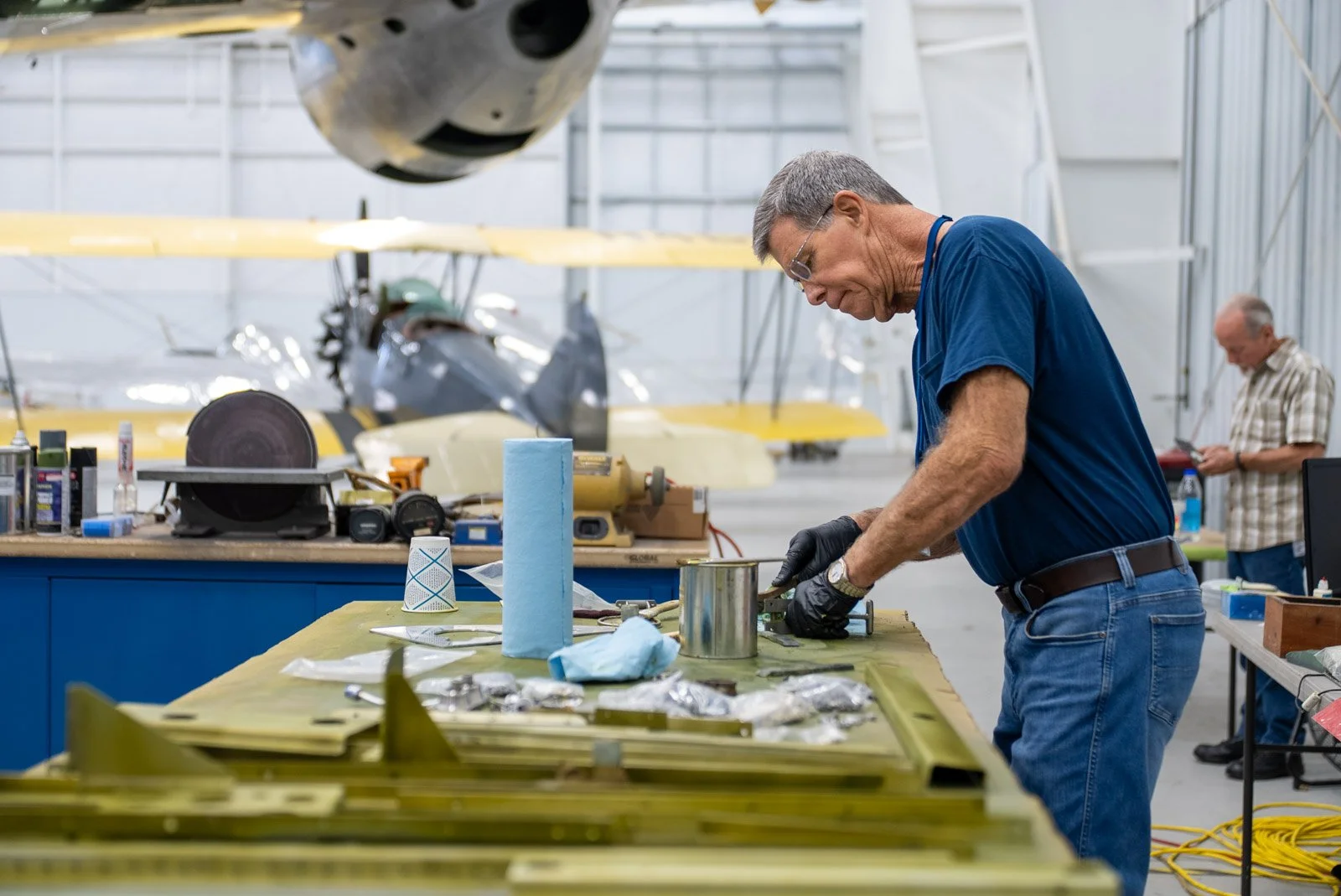
The restoration of Columbine II is built one detail at a time. Reinstalling rivets, polishing an acrylic window, and rebuilding the navigator’s station may seem like separate projects, but each contributes to the same mission.
Restoring Columbine II often means rebuilding parts that are no longer manufactured, without the benefit of complete original plans. Our restoration team must study surviving components, historical references, and the aircraft itself, then repair or recreate each piece by hand.
The First Air Force One Foundation is restoring Columbine II as an airplane for the people. The goal is to return the aircraft to flight and bring it to communities across the country, allowing visitors to step aboard and experience an important part of American presidential and aviation history. Continued public support makes this careful work possible.