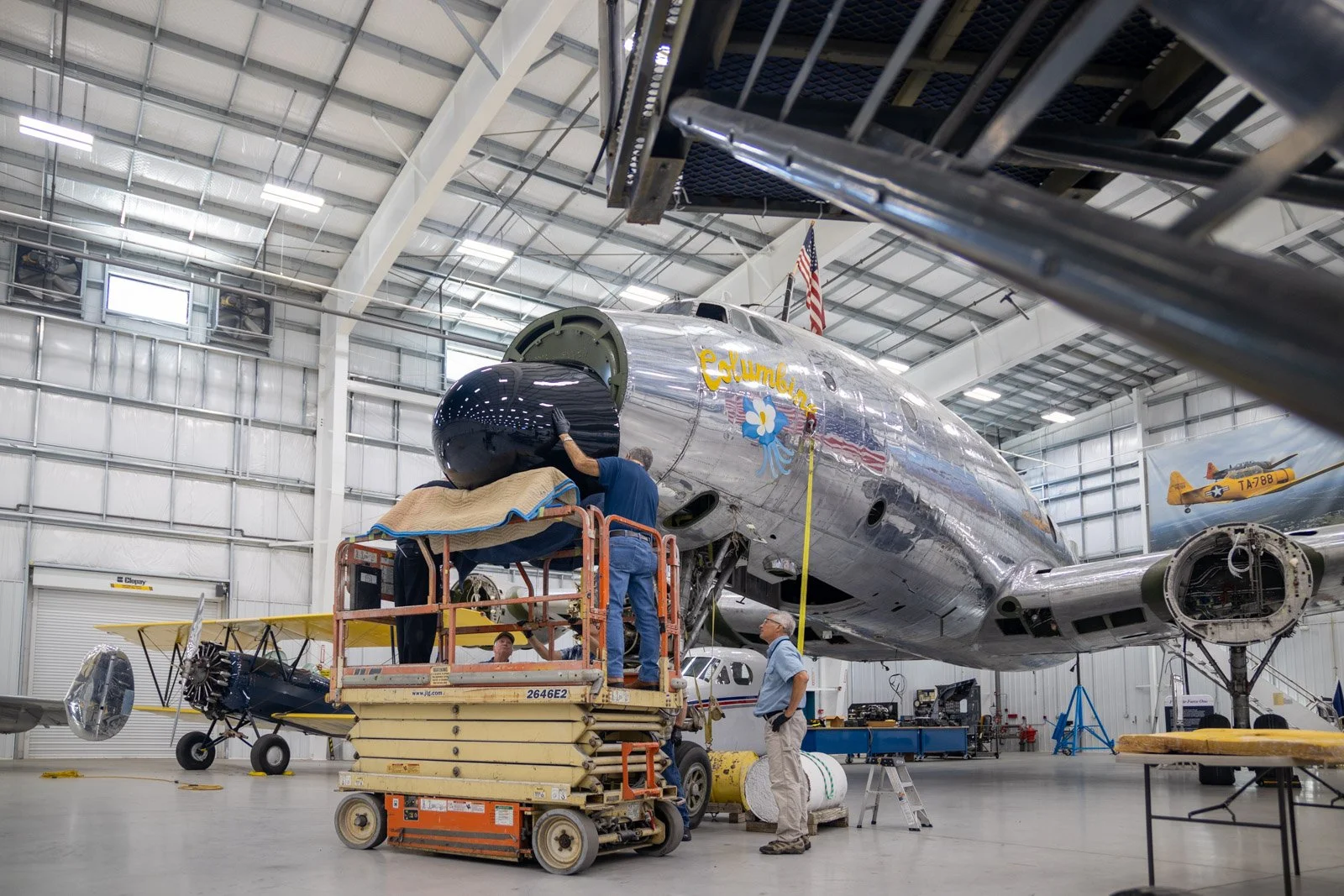
For nearly a decade, Columbine II’s nose cone was off the front of the aircraft. Its removal gave the restoration team access to the radar unit and other components behind it. After careful refurbishment, the nose cone returned to the aircraft.
Across Columbine II, the restoration team has made progress on other parts of the first aircraft to carry the call sign “Air Force One”. The crew door is taking shape, and a presidential seal that was once part of Columbine II has come home.
Bringing the Nose Cone Back
Before the nose cone could return to the aircraft, it needed bodywork, and the craftsman who traveled from Annapolis, Maryland, to do it has a personal connection to the project. He is the father of restoration lead William “Bill” Borchers. At 90 years old, the former pilot, who also taught automotives and geometry, brought a lifetime of hands-on knowledge to the job. “He’s very proud of what he did, and we are too,” Borchers said.
Reinstalling the cone presented its own challenge. Because of its sloped shape, the team built a jig to hold it in position on top of a scissor lift. Two team members raised and aligned the cone while two others worked from ladders on either side, securing it with fasteners.
For Borchers, seeing the refurbished nose back on the aircraft was a memorable moment. “It gives me goosebumps,” he said.
Sign Up for Our Newsletter
Restoration updates and stories from the First Air Force One, delivered to your inbox.
Thank you for signing up! Your email address has been added to our mailing list.
Rebuilding the Crew Door
While the nose cone brought a familiar appearance back to Columbine II’s exterior, work on the crew door shows how much of the restoration takes place beneath the surface.
In our last update, the team was replacing this door's outer panel and restoring its acrylic window.
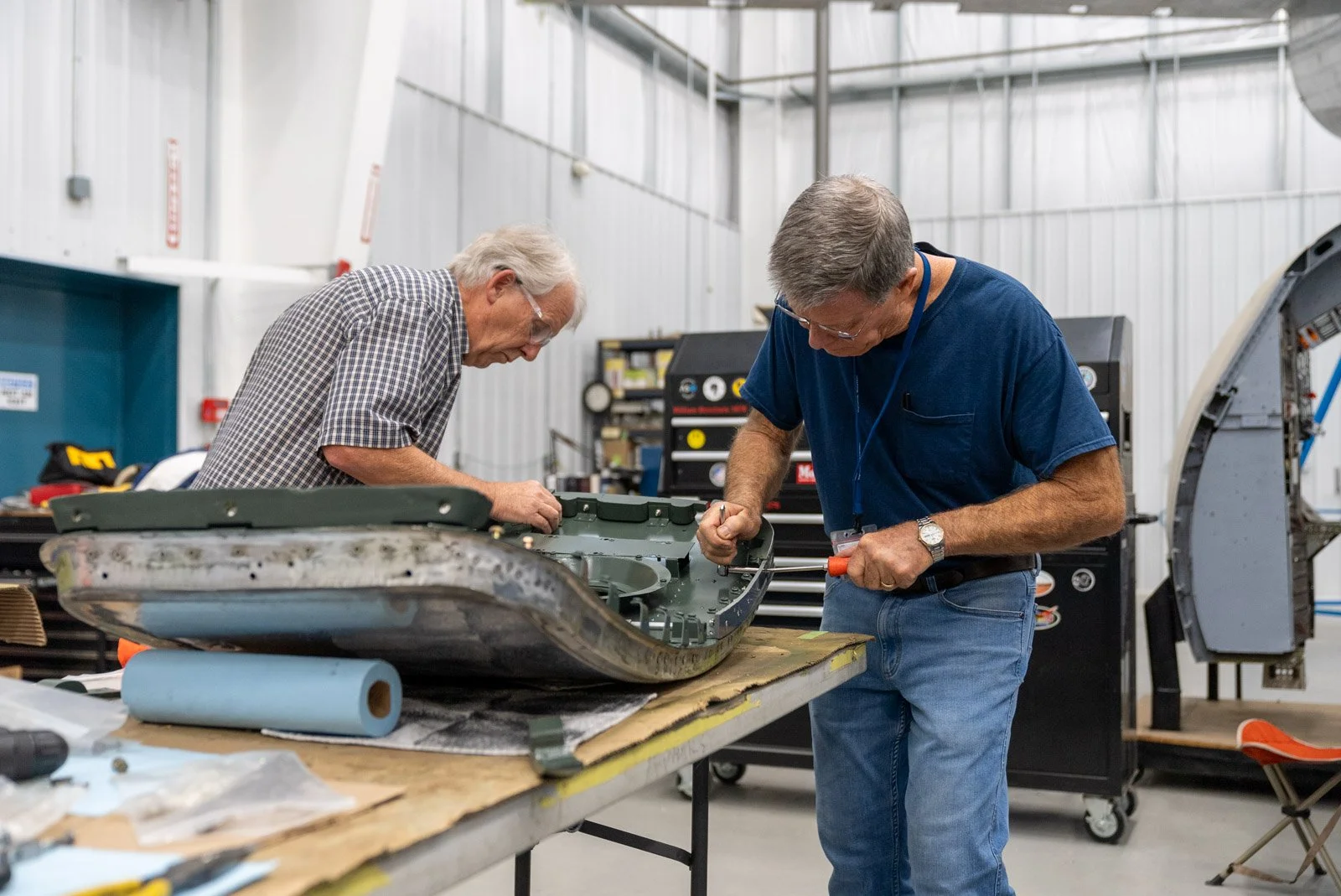
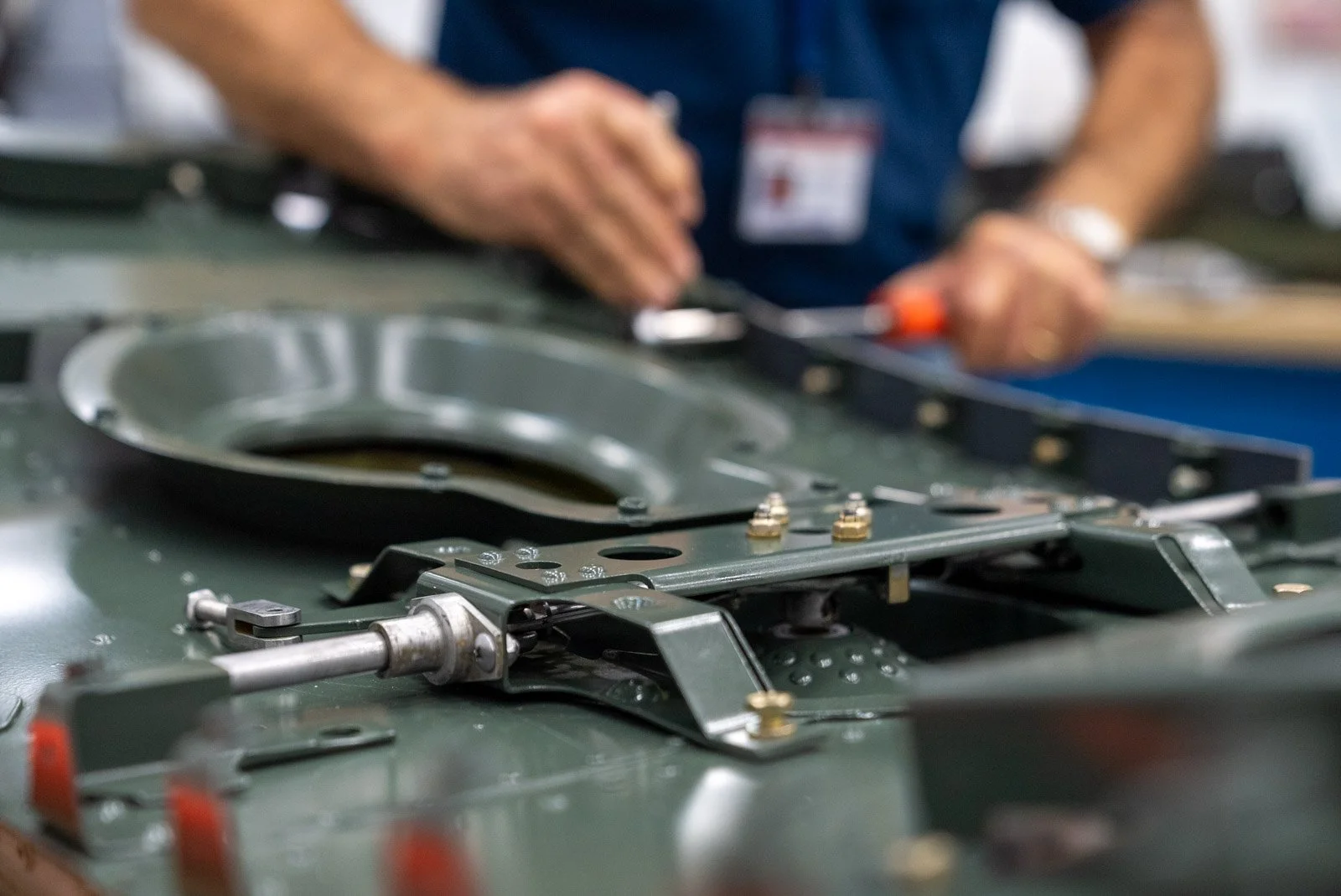
The door’s internal mechanisms have been repaired, and the team is putting its supports and other components back together. The locking mechanism has been painted and is being reassembled. Once it’s complete, six bayonet-style pins will extend from the door to lock it firmly in place so it can’t come loose in flight.
The team is also replacing the wood inside the door with non-burnable plastic, with the goal of removing every wood piece. The new material comes in large sheets. The team cuts it down, traces the shape of each piece, and cuts it out for installation. More pieces will be built on both sides of the door to finish it out.
To complete the track the door slides down before it locks into place, the team salvaged two parts from another aircraft it keeps for parts. One side of the track was missing entirely.
Once the locking mechanism is installed, the team will add cushioning and a pleated cover that snaps into place. The door’s original cushion is still on hand, so the team can use it as a pattern for the new one.
A Presidential Seal Returns
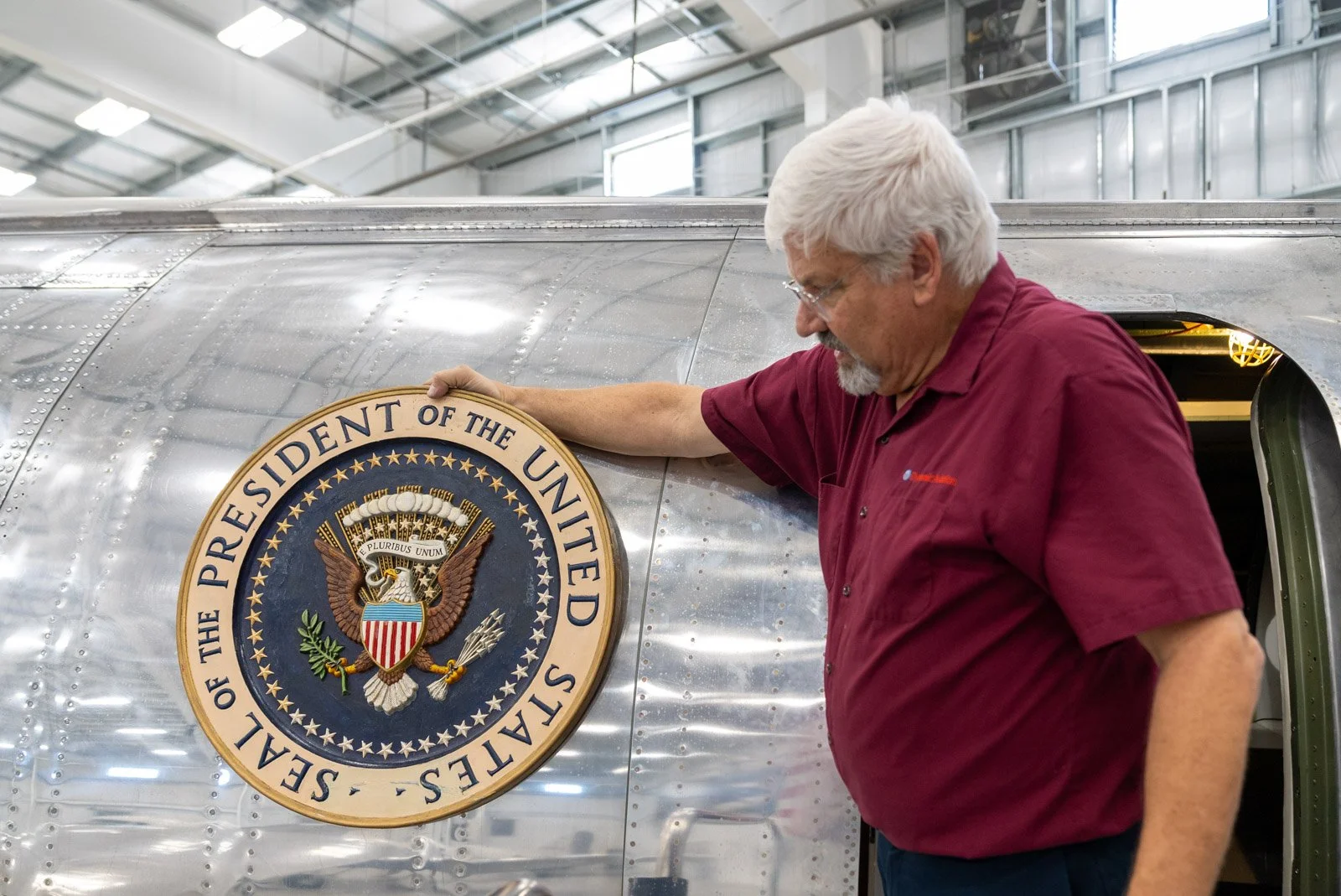
The team also welcomed back a piece of presidential history. A man in California contacted the restoration crew about a presidential seal associated with the aircraft.
The hand-painted fiberglass seal features 48 stars, reflecting the design used during President Eisenhower’s presidency. It has some scratches, and the team plans to refurbish it before putting it on display.
The seal is not the original one that appeared on the outside of the aircraft; at the time of the update, the team was still working to acquire that piece. A display location had not been decided, although Borchers said the returned seal would most likely be placed inside Columbine II.
Preserving the Details That Tell the Story
From a custom-built jig to a carefully shaped door component, the work on Columbine II takes many forms. Some changes are immediately visible. Others sit beneath a cover or inside a mechanism, but each is part of the effort to preserve the aircraft and return it to the air.
The First Air Force One Foundation is grateful to the volunteers, craftspeople, and supporters who make that work possible.
As Borchers put it, “It does take your donations for us to be able to get this airplane in the air again.”