Restoring Columbine II, the first Air Force One, balances historical accuracy with the realities of an almost 80-year-old airframe. This update covers its transition to a "fair weather airplane" configuration, detailed cockpit surface work, pilot panel restoration, and our temporary paint booth for controlled painting.
Fair Weather Airplane Design
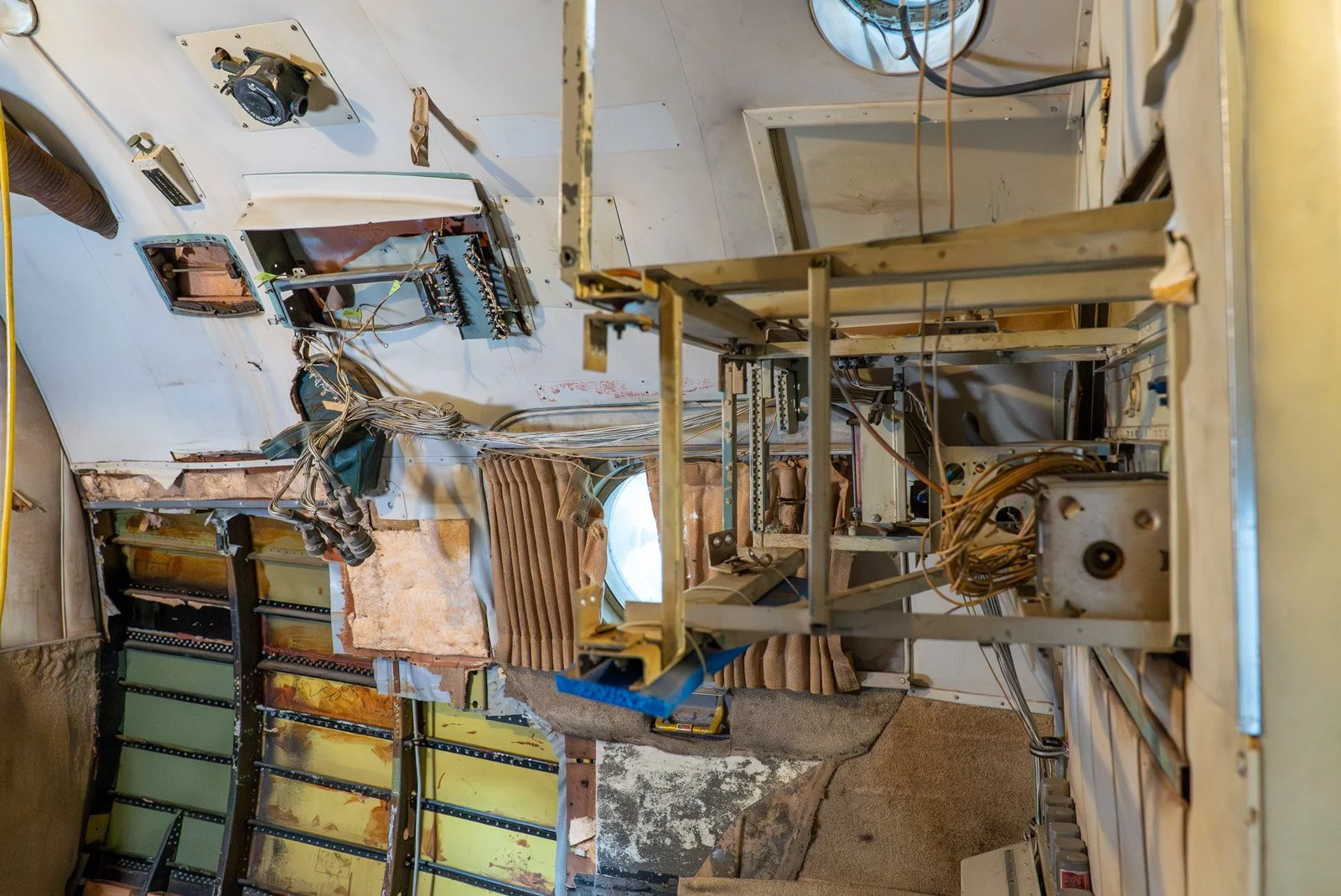
Several systems — including autopilot and pressurization — are being removed to lessen structural stress. These components will be refurbished for static display only. The aircraft will fly below 10,500 feet in good weather, eliminating the need for de-icing, oxygen, and other high-altitude systems to extend its lifespan.
Pilot Panel
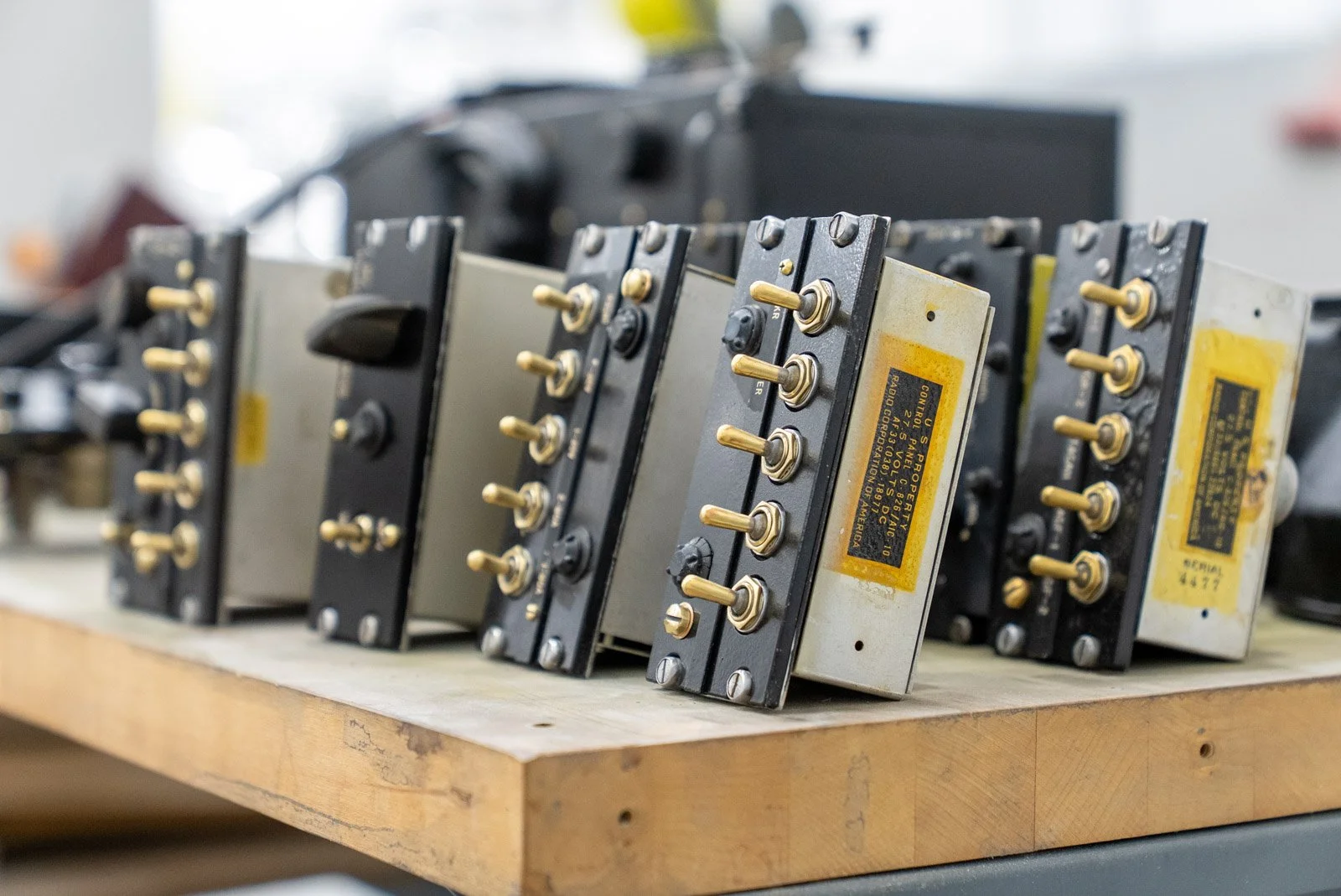
With systems removed, autopilot buttons and controls are taken out for restoration, cleaned, and set for reinstallation as non-operational displays. This preserves the authentic appearance from Eisenhower's era without risking the airframe through active operation. Refurbished pieces highlight the technology that once guided Columbine II safely.
Preparing Cockpit for Paint
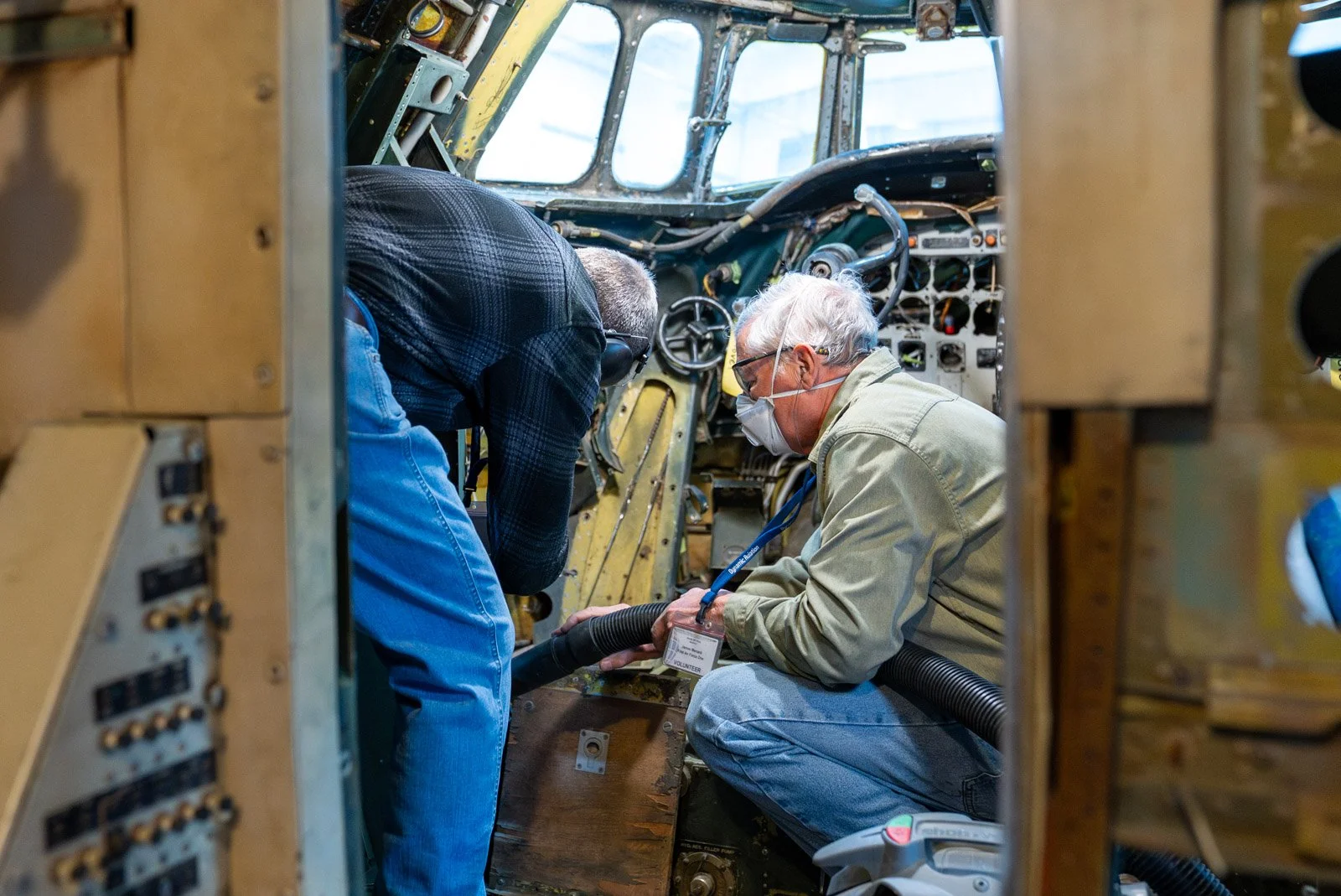
Cockpit electronics are fully removed, allowing crews to sand, vacuum, and manually clear decades-old desert dust from horizontal surfaces. Teams target built-up areas for priming prep, aiming to refresh the signature sunny green finish with careful spray work around immovable fixtures. This stepwise cleaning ensures a durable, uniform base for final painting.
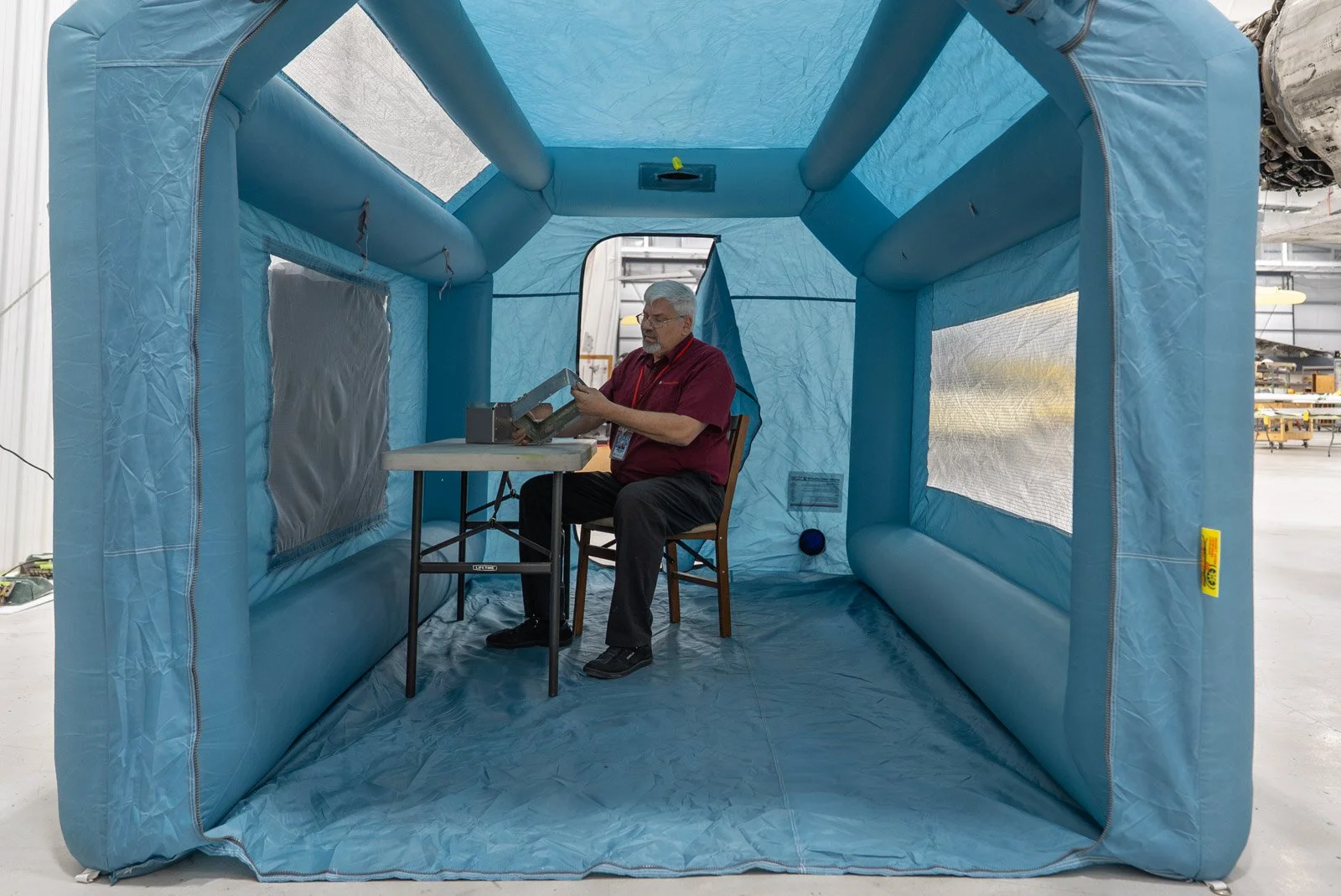
Paint Booth
A portable paint booth with filtration now captures sanding and painting dust, safeguarding other hangar planes from contamination. Panels are sanded on internal tables and cleared with air hoses, maintaining a clean environment at low cost. This addition streamlines prep without spreading particles across the workspace.
Restoration is as much about patience as precision, and every update moves Columbine II closer to honoring her legacy in the skies once more. Stay connected by joining our newsletter as we share new milestones.